








Custom Canvas Bags: How Fabric Weight and Construction Change What the Bag Can Carry
7. August 2026
Canvas weight is measured in ounces per square yard, and it sets the hand-feel and cost of a bag more than its carrying capacity. Load capacity comes from stitching, thread, base construction, and handle attachment. Specify both, or you get a heavy bag that fails at the handle.
That last sentence describes the most common failure in this category, and it happens because the ounce number is the only spec most Canvas-Taschen are sold on. Wholesale canvas-blank listings treat weight as a dropdown variant next to color, which makes it look like the decision. It’s one of about six, and it isn’t the one that determines whether a full grocery load pulls the handle out of the seam.
Custom Canvas Bags: How Fabric Weight and Construction Change What the Bag Can Carry
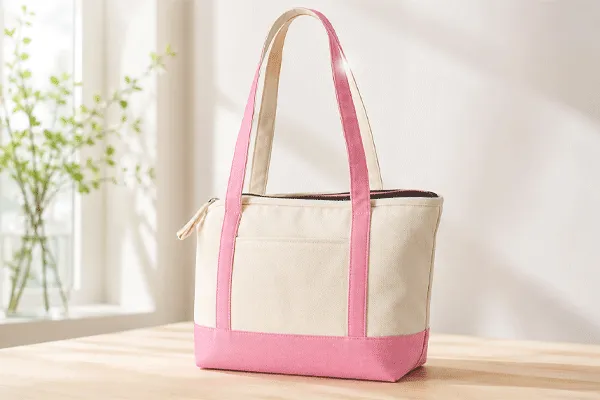
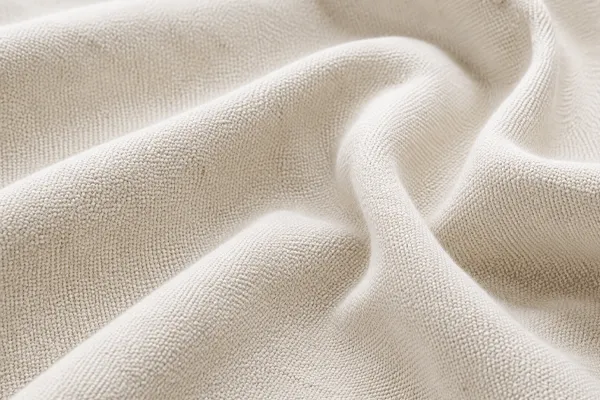
For canvas and cotton duck, weight is stated in ounces per square yard (oz/yd²) of the Stoff, not the finished bag. The conversion to metric is a fixed multiplier: 1 oz/yd² = 33.906 g/m². So a 10 oz canvas is roughly 339 gsm, and a 12 oz is roughly 407 gsm. Any supplier quoting in gsm and any supplier quoting in oz can be compared with that one multiplication.
What the number does not tell you:
This is why two quotations for “12 oz custom canvas totes” can be 30% apart in price and both be accurate. Ask for the fabric weight, the composition, and the finish together, as one line on the spec sheet.
The table below reflects general conventions across the canvas bag trade rather than a catalogue of one supplier’s options. Use it to narrow a range before you request samples, then confirm actual offered weights with your supplier.
| Weight class | Approx. gsm | Hand and behaviour | Typically specified for | Wichtigster Kompromiss |
| 5–6 oz | ~170–205 | Soft, drapes, folds flat, packs small | Event giveaways, book bags, printed shoppers, bag-in-bag inserts | Won’t hold its shape empty; visible strain under weight |
| 8 oz | ~270 | Holds a light structure, still folds | General promotional totes, light retail carriers | Middle ground; can look thin next to a retail benchmark sample |
| 10 oz | ~340 | Stands up on its own when loaded | Grocery totes, reusable shoppers, most retail programmes | Stiffer to fold; slightly higher freight weight |
| 12 oz | ~405 | Firm body, structured sides | Retail merchandise bags, heavier reusables, branded merch sold at price | Print detail can suffer on coarse weaves; costs more per unit and per carton |
| 14–16 oz+ | ~475–545 | Rigid, near-boardlike | Tool bags, utility and heavy-duty carriers, some premium retail | Bulky to fold, expensive to ship, needs heavier machinery and thread |
Two notes that matter more than the classes themselves. First, the jump from 8 oz to 10 oz changes perceived quality more than the jump from 12 oz to 14 oz, so if budget is tight, that’s where the money works hardest. Second, a heavier fabric increases carton weight and volume, which shows up on your freight invoice and not on the unit price you compared.
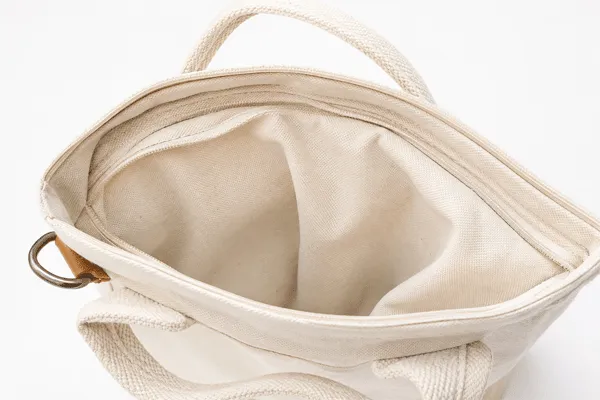
Fabric weight resists abrasion and holds shape. It does not hold the bag together. These do:
Verify it this way: load a sample to the heaviest realistic weight your customer will put in it, lift it by one handle, carry it, and repeat for at least twenty cycles. Photograph the handle joints before and after. Nobody can tell you a load rating from a fabric weight, and a load figure quoted without a tested sample is a guess with units attached.
Custom Canvas Bags: How Fabric Weight and Construction Change What the Bag Can Carry
| Feld | How to write it | Common error |
| Karosserieabmessungen | Width × Height × Gusset depth, with unit stated | Giving two numbers for a three-dimensional bag |
| Griffabfall | Measured from top hem to inside of handle arc | Confusing total handle length with drop; a 60 cm handle is a 27 cm drop |
| Handle width | Stated in mm or inches | Left to the factory, then judged as “too thin” on the sample |
| Gusset and base | Boxed corner depth, or base panel dimensions | Assuming “boxed base” implies a specific depth |
| Tolerance | ± range you will accept on each dimension | Not stated, then treated as zero at inspection |
| Print area | Maximum printable area, with placement measured from a fixed edge | Measuring from the logo centre, which shifts if the bag size changes |
| Weight and composition | oz/yd² or gsm, plus fibre content and finish | Stating oz alone |
The tolerance row is the one buyers skip and later regret. Cut-and-sew products vary; an unstated tolerance means you and the factory are working from two different silent assumptions when the inspection report comes back.
The bag is the product, so hand-feel and print quality carry the decision. This usually points at the firmer end of the scale with a fine, evenly woven fabric for print fidelity, a structured base, and finished interior seams, since a customer will look inside. Woven labels and hangtags belong in the spec here, not as an afterthought.
Repeated wet-and-dry cycles, point loads from cans and bottles, and a life measured in uses rather than impressions. The money belongs in base construction, handle attachment, and thread rather than in extra fabric weight. Ask about shrinkage after washing before you finalise dimensions, because a bag specified at exactly the right size unwashed can come back small.
Volume is high, per-unit cost is the constraint, and the bag must fold flat to ship and to fit in a case. Lighter classes make sense, and the honest position is that this bag is a print carrier with a short working life. Buyers who specify a heavy structured tote for a giveaway pay twice, once in unit cost and again in air or sea volume.
The bag is used weekly for years, so abrasion and colorfastness matter more than initial stiffness. Washed or garment-dyed finishes hide wear better than flat dark dyes. This is also the use case where a heavier fabric genuinely earns its cost.
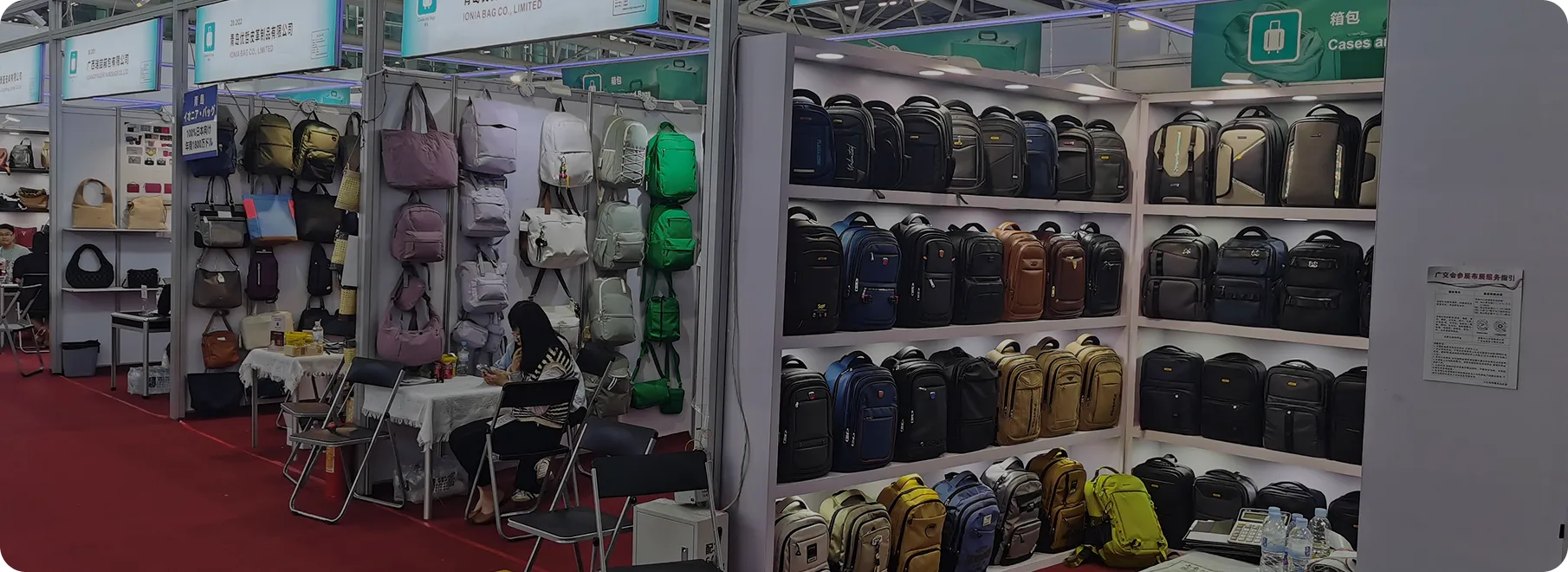
IONIA BAG has manufactured bags from its Qingdao facility since 2010, and canvas bag projects are specified across five dimensions:
Offered weight ranges, standard sizes, and per-project MOQ are quoted against a specific brief rather than published as a list, so the practical route is to send the dimension table above with your target weight class and let the quotation come back with what’s achievable. Compared with the canvas-blank wholesale route that dominates this category, where the oz weight is a dropdown and construction is fixed, a factory-direct spec lets you move cost from fabric weight into stitching and base construction. That’s the trade most retail buyers should be making, and it isn’t available when construction isn’t a variable.
Heavier is not better, and here is the cost of assuming it is.
A 16 oz canvas costs more per metre, folds badly, needs heavier thread and needles, ships at higher volumetric weight, and on a coarse weave can degrade fine print detail. Buyers who default to the heaviest option available sometimes get a bag their own customers describe as stiff and awkward.
Dye and coating compliance is a material question, not a bag question.
If canvas bags are sold into the EU or California, chemical restriction frameworks such as the REACH regulation and Proposition 65 apply to the finished article, including dyes, pigments, coatings, and any hardware plating. These are general industry-wide regulatory frameworks referenced for context here, not certifications held by any particular supplier. Ask for test reports on the specific dyed fabric you approved, and raise the destination market before sampling rather than after production.
A quality system is not a product test.
A management-system standard such as ISO 9001 describes how a company documents and controls its processes; it is a widely used industry benchmark and it says nothing about the tensile strength of your seam. Request the certificate, with number, issuing body, and validity, separately from the physical test report on your material. Both, if both exist.
Shrinkage and colorfastness on unwashed canvas.
Natural cotton canvas moves. If your dimensions must be held after a wash, say so in the spec, and test a sample through the wash cycle your end customer will actually use.
Custom Canvas Bags: How Fabric Weight and Construction Change What the Bag Can Carry
IONIA BAG quotes factory pricing per project and does not publish price lists or ranges for canvas bags, so a per-piece figure without a spec attached is a placeholder rather than a price. What you can establish before quoting is the cost structure: fabric consumption per bag (driven by dimensions and weight), sewing minutes (driven by construction), one-off setup for printing or embroidery, hardware, packaging, and freight (driven by carton volume and gross weight). Once you know which of those your design is loading, two quotations become comparable.
For a real number: send the dimension table, your target weight class, composition, finish, logo method, and quantity by colorway, and ask for pricing at two quantity tiers. Anything short of that returns a range.
Anchoring a canvas spec on fabric weight gives you a single number you can hold a supplier to, that transfers between suppliers, and that correlates with cost closely enough to budget from. It’s the fastest way to get comparable quotations, and it’s why the trade uses it.
What it doesn’t do is describe the bag. Weight is silent on handle attachment, thread, base construction, and seam finish, which is where bags fail. It’s also silent on print quality, and it actively misleads on cost, because a heavier bag charges you again at the freight stage. A buyer who specifies only weight has controlled about a third of the outcome and will discover the rest at inspection.
A: Most reusable grocery programmes land in the 10–12 oz range (roughly 340–405 gsm), but the weight is less decisive than base construction and handle attachment. A 10 oz bag with a boxed base, webbing handles carried under the base, and bar-tacked stress points outlasts a 14 oz bag with handles stitched only to the top hem.
A: Multiply oz/yd² by 33.906. So 8 oz ≈ 271 gsm, 10 oz ≈ 339 gsm, 12 oz ≈ 407 gsm, 16 oz ≈ 542 gsm. Confirm which unit a supplier is quoting in, because the same bag looks very different depending on the number in the cell.
A: There is no reliable answer from fabric weight alone. Load capacity depends on the handle joint, thread, stitch density, and base. Have a physical sample load-tested to your intended weight and use cycles before approval, and treat any load figure quoted without a tested sample as marketing.
A: ECO material options are available, and recycled-content and blended canvas are sold on the same oz scale. Hand-feel and dye behaviour can differ from virgin cotton at identical stated weight, so approve a physical swatch in your actual colour rather than substituting on paper.
A: Not necessarily. Print fidelity tracks weave density and surface finish more than weight. A finely woven 10 oz can hold detail better than a coarse 14 oz. If your artwork has small text or fine linework, ask for a print strike-off on the exact fabric before you commit.
A: Untreated cotton canvas can shrink after washing. If finished dimensions must hold post-wash, specify that in the brief and have the sample tested through the intended wash cycle, then set your dimension tolerances against the washed measurement.


Wir werden Ihnen innerhalb von 24 Stunden antworten. Wenn für dringenden Fall, fügen Sie bitte WhatsApp/WeChat: +86 15066236153,. Oder rufen Sie direkt +86 17657177170 an.
*Wir respektieren Ihre Vertraulichkeit und alle Informationen sind geschützt.
Wir verwenden Ihre Daten nur zur Beantwortung Ihrer Anfrage und senden Ihnen niemals unaufgefordert E-Mails oder Werbenachrichten.
 letzter Blog
