


Personalized Zippered Tote Bags: A B2B Guide to Zipper Quality, Construction, and Customization
November 03, 2026
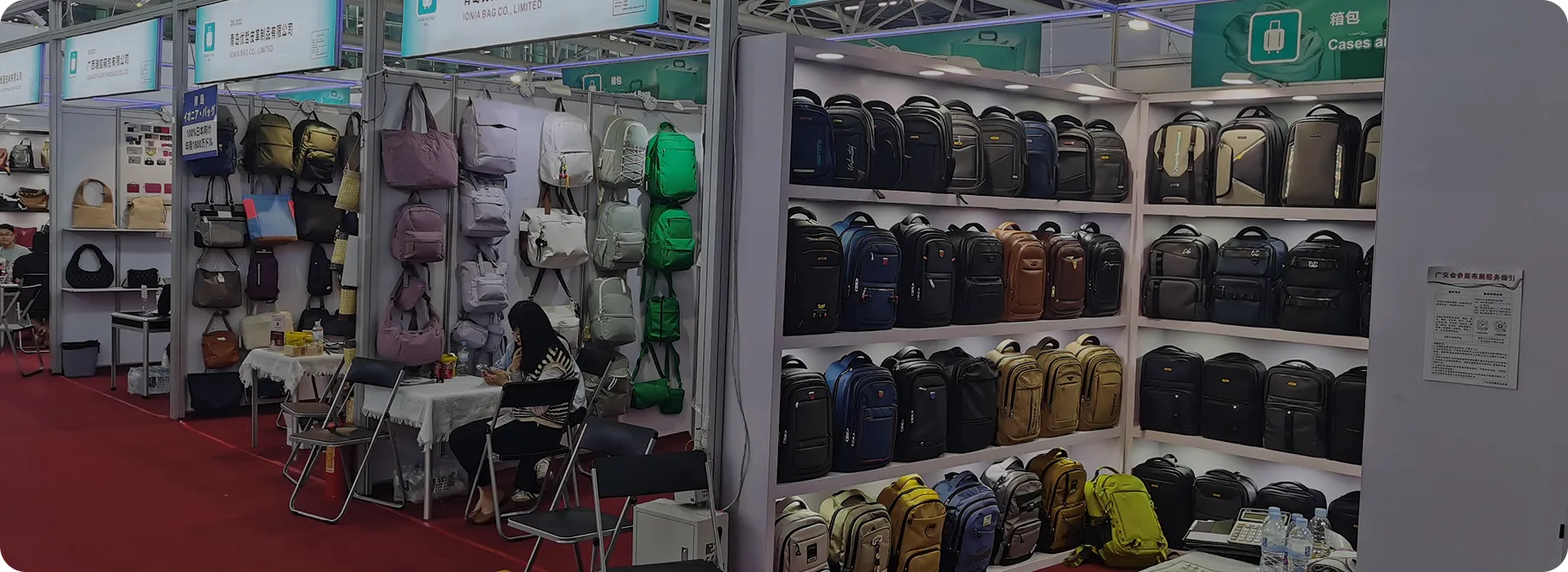
A personalized tote may look perfect in a sample but fail after bulk production if the zipper sticks, the opening is too short, or the handles pull against weak seams. For brands and importers, these small construction mistakes can become returns, complaints, and expensive rework. Better specifications prevent them.
Personalized zippered tote bags are custom tote bags built with a secure zip closure and buyer-defined materials, dimensions, branding, pockets, handles, and hardware. For B2B buyers, the best zippered tote bag is not simply the most stylish option. It should combine the right zipper specification, fabric strength, opening design, reinforced construction, branding method, and repeatable quality control for bulk production.

Personalized Zippered Tote Bags: A B2B Guide to Zipper Quality, Construction, and Customization
A standard open-top tote is simple. Add a zipper, however, and the construction becomes more demanding.
The zipper affects how the entire tote bag opens, closes, hangs, and carries weight. A poorly planned closure can make a spacious tote bag difficult to use even when the body dimensions look correct. If the opening is too narrow, users may struggle to insert laptops, files, packages, or shopping items. If the zipper tape is sewn under too much tension, the top edge may wave or twist.
For importers, distributors, and private-label brands, this matters because customers do not judge a personalized tote only by its logo. They touch the zip every time they use the product.
A well-designed zippered tote should therefore balance four things:
From our experience manufacturing custom bags for B2B buyers, we recommend treating the closure as a structural component rather than a decorative accessory.
That shift makes supplier discussions much more useful.
There is no universal zipper that works for every zippered tote bag.
The correct choice depends on fabric weight, target price, product style, expected use, and whether the tote is positioned as a promotional item, retail product, corporate gift, or outdoor accessory.
A simple comparison helps.
| Zipper Type | Main Advantages | Common Tote Applications | Key Buying Concern |
|---|---|---|---|
| Nylon coil zipper | Flexible, lightweight, smooth | Canvas tote, travel tote, promotional bag | Coil and slider consistency |
| Molded plastic zipper | Strong visual appearance, robust teeth | Outdoor and lifestyle products | Bulkier construction |
| Metal zipper | Premium appearance and feel | Fashion and premium retail tote | Weight, finish, corrosion risk |
| Concealed zipper | Cleaner exterior appearance | Fashion-oriented custom tote | More complex sewing |
| Two-way zipper | Wider access from either side | Large travel or organizer tote | Alignment and slider control |
For many canvas tote programs, a nylon coil zipper gives a useful balance of flexibility, cost, and smooth operation. A fashion-oriented custom tote bag may instead use polished metal hardware to support a more premium brand position.
Do not specify only “black zipper” or “metal zipper” in an RFQ.
A useful zipper specification may include:
A custom zipper pull can also become part of the branding system. However, extra tooling and finishing may change cost, lead time, and minimum quantity, so it should be discussed during sampling.
The outside dimensions of a tote bag with zipper do not tell you how large the usable opening will be.
This is one of the easiest points to miss in product development.
Imagine a tote that measures 45 cm across the top. That does not automatically mean the usable opening is 45 cm. End seams, zipper stops, side construction, lining, and zipper extensions can reduce the actual access area.
For a work or travel tote bag with a zipper, we normally ask what the customer expects to place inside before finalizing the top construction.
For example:
| Intended Use | Important Opening Consideration |
|---|---|
| Laptop/work tote | Device must pass through opening without force |
| Shopping tote | Opening should support bulky everyday items |
| Trade-show tote | Catalogs and sample boxes need easy access |
| Travel tote | Wide access helps packing and inspection |
| Cosmetic or beauty tote | Smaller secure opening may be acceptable |
| Corporate gift | Ease of use and clean appearance both matter |
A zip top can be sewn directly between the main body panels or added through a recessed zipper construction. These options create different looks.
A recessed zipper often produces a cleaner silhouette and can help the bag stay flexible. A zipper located directly at the top edge may maximize access and simplify the structure.
Neither is automatically better.
The right answer follows the end use.
Material affects much more than appearance.
It affects how the zipper is installed, how the top edge behaves, how much reinforcement is needed, and how the finished tote feels when carried.
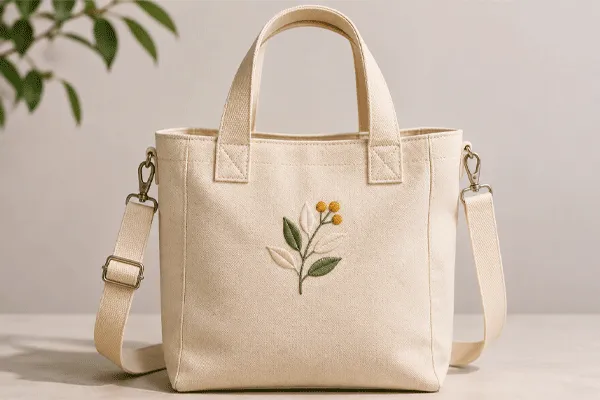
Cotton canvas remains a useful choice for retail, lifestyle, promotional, and private-label programs. It provides a natural surface for printing and can create a structured look when heavier weights are selected.
A canvas tote bag can also support:
However, heavy canvas around the zipper seam can become bulky. The sample should therefore confirm whether the seam allowance and binding create an acceptable finish.
Polyester and nylon can suit travel, promotional, outdoor, and lightweight everyday products.
They may offer:
For outdoor or travel brands, the practical value may matter more than the natural look of canvas.
A jute tote creates a distinctive natural texture and works well for retail, gifting, food, lifestyle, and promotional projects.
But jute has a rougher structure than smooth woven fabrics. Zipper installation and edge finishing therefore require careful construction.
If you plan to personalize a jute tote with embroidery or printing, the decoration method should also be tested on the actual production material.
Material first. Decoration second.
That simple rule avoids many sampling problems.
Personalization should improve the product, not overwhelm it.
Brands can customize a tote through much more than a large front logo. Size, handle design, lining, zipper pull, labels, pockets, thread color, packaging, and even the interior structure can all reinforce the product identity.
Common options include:
A monogram or customer initial can work especially well in premium gifting and retail personalization programs.
However, factory-level personalization and consumer-level personalization are different business models.
For bulk production, a buyer might order several predetermined embroidered initials or names. For an in-store personalization program, the factory may instead produce blank monogrammed tote bags designed so the retailer can add the final initials locally.
That distinction affects inventory planning.
The same principle applies to a personalized zipper tote. Decide which design elements should be fixed during bulk production and which, if any, should remain customizable later.
Both can work, but they create different results.
Screen printing is often effective when a canvas tote uses simple artwork, strong colors, and larger production volumes. Embroidery creates texture and can support premium positioning, but dense stitching may stiffen the fabric.
That matters near the zipper.
If you embroider a large logo too close to the top seam, the embroidery backing and stitch density can interfere with assembly or change the way the fabric sits.
Keep decoration and construction on the same specification sheet.
| Branding Method | Strong Point | Watch For |
|---|---|---|
| Screen printing | Efficient for clean graphic logos | Ink behavior and registration |
| Embroidery | Premium texture and durability | Fabric puckering and stitch density |
| Woven label | Consistent small details | Label position and sewing |
| Heat transfer | Detailed multi-color artwork | Fabric heat compatibility |
| Custom hardware | Premium brand detail | Tooling and minimum quantities |
IONIA BAG already treats printing and bag construction as connected manufacturing decisions rather than separate steps. Existing sourcing guidance on the site also recommends confirming the production fabric and decoration method together before bulk production.
For a monogrammed product, embroidery can be attractive, but it is still worth testing the exact thread, letter size, placement, and base fabric before approving mass production.
A zipper solves one problem: top security.
It does not solve organization.
For a more functional custom tote, internal structure can have a major effect on how customers perceive the product.
Possible features include:
One useful compartment can add more value than several poorly sized pockets.
For example, a work tote may need a padded laptop area and one smaller zipped pocket. A retail shopping tote may only need an open slip pocket. A travel tote may benefit from several zones because customers carry documents, chargers, bottles, and personal items.
Be careful with space.
Every interior feature uses part of the available volume. A spacious exterior does not guarantee useful interior capacity once thick lining, padding, pockets, and dividers are added.
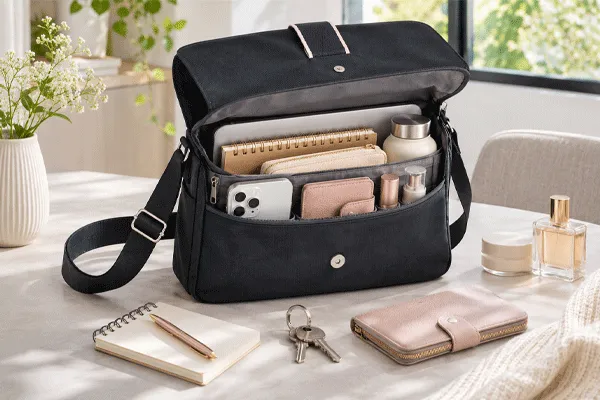
That is why buyers should review the finished sample while actually loading it with representative items.
Do not approve it empty.
Personalized Zippered Tote Bags: A B2B Guide to Zipper Quality, Construction, and Customization
The zipper normally receives attention because it moves.
But many tote failures occur elsewhere.
The shoulder straps, handle attachment points, side seams, bottom corners, and zipper ends all experience stress during real use.
If users fill a large tote with books, groceries, work equipment, or travel items, the bag body pulls downward while the handles pull upward. The top edge sits between those forces.
That means your specification should consider the entire load path.
Important areas include:
Handle attachment
Box stitching, cross stitching, bar tacks, or additional reinforcement may be used depending on the design.
Zipper ends
Poorly secured zipper ends can become weak points or create an unfinished appearance.
Top-edge reinforcement
A soft lightweight tote may not require the same support as a large structured retail design.
Bottom construction
A wider gusset increases usable volume but can also increase the amount of weight customers place inside.
Fabric weight
Heavier is not always better, but fabric must fit the intended load.
This is where durability becomes a construction question rather than a marketing word.
A durable tote results from compatible materials, sensible dimensions, proper stitching, reinforcement, and controlled assembly.
A sample is not only for choosing color.
Treat it as a physical specification.
Before approving a zip tote for production, inspect both appearance and function.
| Checkpoint | What to Inspect |
|---|---|
| Dimensions | Width, height, depth, handle drop |
| Fabric | Type, weight, feel, color |
| Zipper | Smoothness, length, alignment, slider |
| Opening | Usable access width |
| Logo | Size, placement, color |
| Handles | Position, symmetry, reinforcement |
| Lining | Fit, wrinkles, seam quality |
| Internal pockets | Size and placement |
| Stitching | Density, skipped stitches, loose threads |
| Shape | Symmetry and top-edge alignment |
| Packing | Folding method and protection |
Open and close the zipper repeatedly.
Load the bag.
Carry it.
Place it on a table.
Insert the intended products.
Check whether the zipper catches the lining.
These simple actions often reveal more than inspecting a sample under bright office lights.
For buyers who require formal zipper performance evaluation, ASTM D2061 covers several strength tests for zippers and zipper components, including chain strength, slider pull-off resistance, stop strength, and slider-lock holding strength. The exact test method should be selected according to the zipper type and project requirements.
Not every promotional tote needs laboratory zipper testing. But buyers should at least define what performance they expect instead of assuming every zipper performs equally.
A good approved sample is only the beginning.
The real goal is repeatability across the full order.
For personalized tote bags, bulk QC should compare production pieces with approved references for fabric, color, construction, logo placement, hardware, stitching, dimensions, and function.
A practical inspection flow can look like this:
Incoming materials → Cutting → Decoration → Sewing → Zipper installation → In-line inspection → Final inspection → Packing verification
At the zipper stage, inspectors may check:
For private-label projects, one of the biggest risks is specification drift.
A replacement zipper that looks similar may have a different slider, finish, tape width, or operating feel. If substitutions are necessary, the buyer should approve them before production continues.
Quality-management systems such as ISO 9001 focus on controlled processes, consistent delivery, monitoring, and continual improvement rather than simply checking finished products at the end. That process mindset is especially useful for repeat B2B programs.
At IONIA BAG, our B2B manufacturing workflow includes material review, sampling, bulk production, in-process checks, finished-product inspection, and export packing support. The website also states that buyer-appointed third-party inspection can be supported when required.
A vague RFQ creates a vague quotation.
“Please quote 5,000 canvas totes with zipper and logo” leaves too many open questions.
A better RFQ for custom tote bags with zipper should provide enough information for the factory to understand the product.
| Field | Example Information to Provide |
|---|---|
| Product use | Retail / promotion / travel / corporate gift |
| Quantity | Estimated first order + annual volume |
| Size | W × H × D |
| Fabric | Canvas / polyester / nylon / jute |
| Fabric color | Pantone or physical reference |
| Closure | Zipper type and opening |
| Handles | Material, width, length |
| Interior | Lining, pockets, laptop sleeve |
| Branding | Print, embroider, label, hardware |
| Logo size | W × H and placement |
| Packaging | Individual / bulk / private label |
| Target market | EU / US / other |
| Required testing | Buyer-specified requirements |
| Target date | Required delivery window |
If you do not know every answer, that is fine.
That is where ODM development is useful.
A brand may begin with a reference image and target price. An OEM buyer may already have a complete tech pack. Both can work, but the factory needs to know which development route you expect.
As a China-based custom bag manufacturer, we support importers, distributors, brand owners, e-commerce sellers, promotional companies, corporate buyers, and outdoor or lifestyle brands with OEM, ODM, and private-label development.
Our role is not simply to put a logo on an existing bag.
It is to turn the required function, market position, appearance, quantity, and commercial target into a production-ready product.
Personalized Zippered Tote Bags: A B2B Guide to Zipper Quality, Construction, and Customization
The safest bulk order begins before mass production.
Start with the user.
What will they carry? How often will they use the tote? Will they wash it? Will it travel? Does it need to look premium on a retail shelf, or does it need to meet a promotional budget?
Then build the specification backward from those answers.
A useful development sequence is:
This approach is especially important for importers and distributors managing repeat programs.
The cheapest first order is not always the lowest-cost program.
If zipper quality changes between shipments, color varies, handles move several millimeters, or packaging changes without approval, the buyer spends time solving problems instead of selling products.
Consistency creates value.
That is where a long-term factory relationship matters.
Yes. Personalized tote bags can use a full top zipper, recessed zipper, concealed design, or other closure structure. The right option depends on the bag shape, material, intended opening width, and target appearance.
A nylon coil zipper is often practical for a canvas tote bag because it is flexible and smooth, but metal or molded zippers may suit other designs. The best choice depends on fabric weight, product style, expected load, budget, and brand positioning.
Yes. You can add embroidery to a tote bag with zipper, but logo placement and stitch density should be considered during construction. Large embroidered areas placed too close to the zipper seam can affect fabric behavior and assembly.
Yes. A jute tote can use a zipper, although the rougher fabric structure may require additional edge finishing or reinforcement. Sampling is important because jute behaves differently from smooth cotton canvas or synthetic fabrics.
Yes. A monogrammed tote can include an initial, name, short text, embroidered mark, patch, or other personalization. For large programs, decide whether personalization will occur at the factory in batches or later at the retailer or fulfillment location.
Send the estimated quantity, dimensions, material, zipper type, handle design, logo artwork, interior requirements, packaging, target market, and delivery schedule. If the design is still developing, reference photos or sketches can be used to begin an ODM discussion.
We will reply you within 24 hours. If for urgent case, please add WhatsApp/WeChat: +86 15066236153,. Or call +86 17657177170 directly.
*We respect your confidentiality and all information are protected.
We will only use your information to respond to your inquiry and will never send unsolicited emails or promotional messages.
 last blog
