


Designer Handbags Sale: How Retailers Can Source Original Designer Bags Without Counterfeit Risk
November 18, 2026
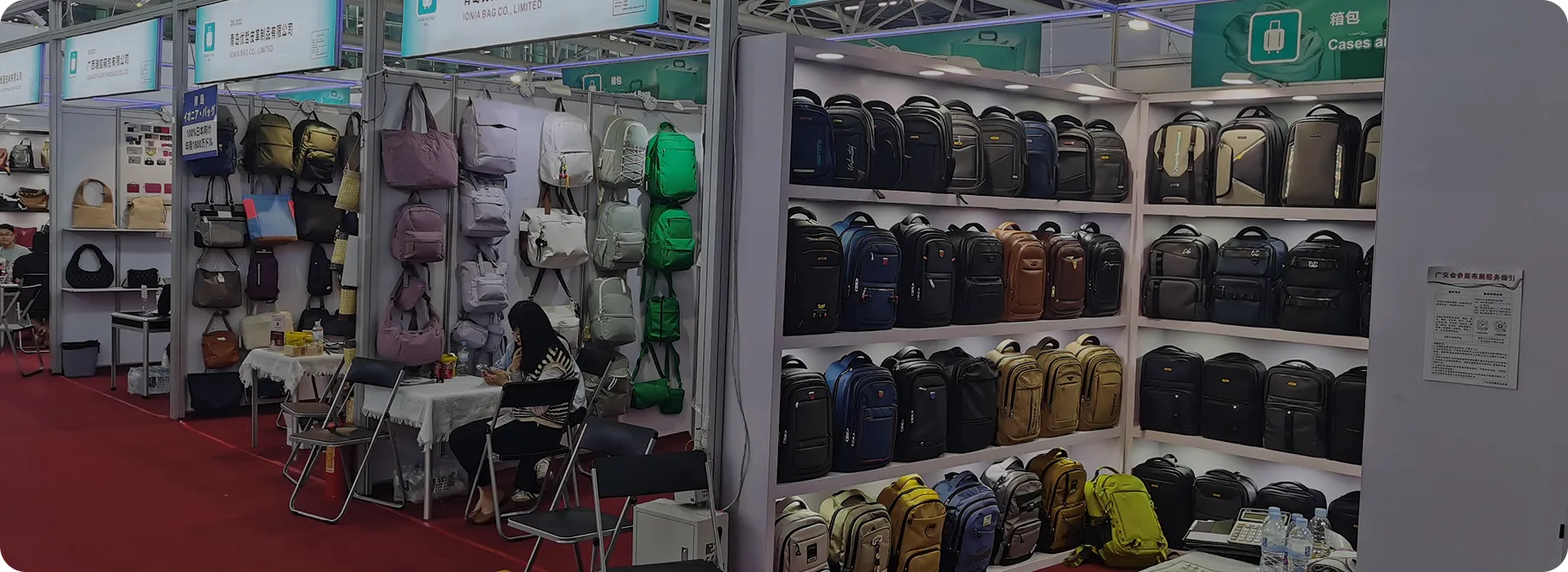
Low-priced designer handbags can attract clicks, but unclear authenticity, inconsistent quality, and weak profit margins can turn a promotion into a costly problem. For retailers, a better approach is to develop original private-label handbags with clear specifications, controlled costs, and a reliable manufacturing partner.
Retailers responding to searches for designer handbags on sale can build their own premium-looking collections by sourcing original private-label products at competitive wholesale prices. The key is to choose distinctive designs, suitable materials, verified manufacturing partners, and quality-controlled production instead of purchasing counterfeit branded goods.
Designer Handbags Sale: How Retailers Can Source Original Designer Bags Without Counterfeit Risk
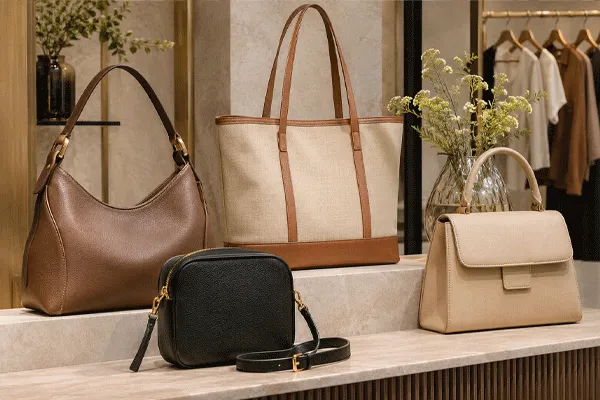
The market for fashion handbags includes many price levels, from affordable everyday products to premium designer collections. For importers, distributors, and brand owners, this creates an opportunity to develop products that combine attractive design, practical features, and a price that suits their customers.
However, sourcing the right products takes more than finding a low quotation. Buyers must understand brand ownership, product originality, manufacturing quality, and the real cost of bringing a handbag to market.
As a China-based custom bag manufacturer, IONIA BAG provides OEM, ODM, and private-label manufacturing solutions for global B2B buyers. This guide explains how to source original fashion handbags, avoid counterfeit risks, and build a competitive product line for your retail business.
When consumers search for designer handbags sale, they are usually looking for attractive products at reduced retail prices. They may compare luxury handbags, seasonal promotions, outlet products, and affordable alternatives. However, a retailer or importer has a different question: how can the business source products that offer a premium appearance without creating unnecessary purchasing risks?
Search phrases such as sale handbags, bags on sale, designer bags sale, and discount designer products often reflect different shopping intentions. Some consumers want an authentic branded product, while others are simply looking for a well-designed handbag at an affordable price.
For B2B buyers, these searches can reveal customer expectations, but they should not become a reason to purchase unauthorized branded goods. Instead, retailers can develop their own original products with suitable materials, distinctive details, and clear brand identity.
There are three practical sourcing directions:
Each option has a different business model. For companies building long-term retail value, the second option provides more control over product identity, customization, and future collection development.
An authentic designer handbag is produced and sold under the authorization of its brand owner. Its trademark, product identity, and distribution rights belong to that brand. A private-label handbag, by contrast, is developed or sourced by a business and sold under its own brand name.
These two models should never be confused. A manufacturer producing original handbags for a retailer does not automatically have the right to use another company’s trademark or claim that its products are authentic items from that company.
Consumers may search for names such as Burberry, Tory Burch, Marc Jacobs, Valentino, Stella McCartney, MCM, Balenciaga, or Ferragamo. These are independent third-party brands, not IONIA BAG product lines or affiliated labels. Buyers interested in private-label production should treat such products as market references rather than items to reproduce or misrepresent.
| Comparison | Authentic Designer Product | Original Private-Label Product |
|---|---|---|
| Brand ownership | Existing brand owner | Your own brand |
| Design source | Brand’s authorized collection | Buyer or manufacturer development |
| Trademark | Authorized brand trademark | Buyer’s authorized trademark |
| Purchasing channel | Authorized distribution | Direct manufacturer or supplier |
| Customization | Controlled by brand owner | Based on project agreement |
| Market positioning | Established brand identity | Independently developed identity |
A private-label product does not need a famous logo to look professional. Its shape, material, construction, finishing, and packaging can create a recognizable style of its own.
This gives retailers more freedom to build a collection that reflects their target customers rather than depending on another company’s brand reputation.
Counterfeit products can create serious commercial problems for importers and distributors. A low purchasing price may look attractive, but unauthorized logos, copied patterns, and misleading product descriptions can lead to customs issues, marketplace complaints, product seizures, or legal disputes.
The World Intellectual Property Organization (WIPO) explains that fashion products can involve several types of intellectual property protection, including trademarks, copyright, and industrial design rights. Handbags may contain protected brand names, logos, graphic patterns, and distinctive visual elements.
Before placing an order, buyers should follow these practical steps:
Even a product without a copied logo may raise design-related concerns if it closely reproduces protected visual features. The legal position depends on the design, applicable rights, and destination market.
For this reason, we recommend that buyers develop an independent product specification rather than simply requesting a copy of an existing luxury handbag.
An original design is also a better foundation for building a lasting brand.
A strong handbag collection should offer different products for different customers. Some shoppers prefer a structured shoulder bag, while others want a lightweight crossbody bag for everyday use. Retailers should choose product categories according to their sales channels and customer needs.
Consider these common styles:
| Handbag Style | Main Features | Potential Retail Market |
|---|---|---|
| Shoulder bag | Comfortable shoulder carrying | Everyday fashion |
| Crossbody bag | Adjustable long strap | Travel and casual use |
| Tote bag | Spacious main compartment | Work and shopping |
| Hobo bag | Soft, relaxed silhouette | Lifestyle collections |
| Top-handle bag | Structured body and upper handle | Office and formal use |
| Clutch bag | Compact construction | Evening and special occasions |
| Satchel | Defined shape and organized storage | Business and daily use |
| Pouch bag | Small and lightweight | Accessories and gifting |
| Backpack | Hands-free carrying | Travel and lifestyle |
A retailer may also consider an east-west shape, a compact pouch, or a chain-strap design to create more variety. The objective is not to include every possible silhouette. It is to offer products with clearly different functions and customer appeal.
IONIA BAG’s existing handbag collection provides several real product directions, including a bamboo-handle handbag, a laser-cut handbag with a removable pouch, a structured faux-leather tote, and minimalist handbags with adjustable or chain straps.
You can view these examples in the IONIA BAG Handbag Collection.
For a growing brand, starting with a few well-defined styles is often more practical than purchasing many similar products. This makes product testing, stock planning, and future reorders easier to manage.
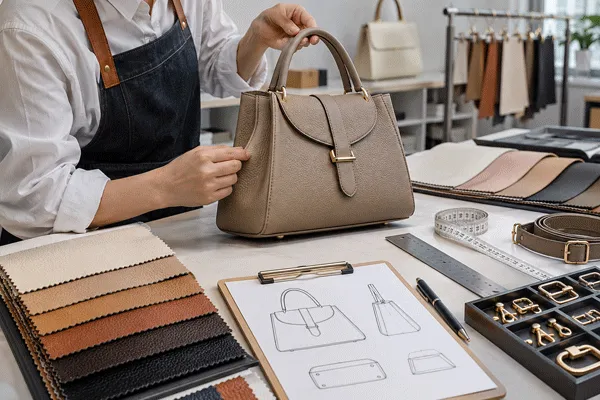
Material selection has a direct effect on product appearance, cost, durability, and customer perception. A premium-looking handbag does not always require expensive genuine leather. The right material depends on the product’s intended use and target retail price.
Common options include:
Additional surface directions may include croc-embossed leather, textured calfskin, raffia-style weaving, or decorative quilted panels. These are possible design concepts, not claims that every material is available as a standard option. Their feasibility should be confirmed during product development.
Details matter just as much as the main material. A leather shoulder bag may look refined because of its clean edge finishing, balanced proportions, neat stitching, and carefully selected hardware.
For example, a structured top-handle design may use reinforced handles and a stable base, while a softer hobo bag may need a more flexible body construction.
IONIA BAG supports leather and PU leather, canvas, and recycled material options across its handbag development work. The factory also provides logo embossing, debossing, metal logo plates, hardware color choices, and Pantone color matching. These options are shown on its handbag manufacturing page.
The important point is to select the material and finishing together. A beautiful surface cannot compensate for weak stitching or unsuitable construction.
Designer Handbags Sale: How Retailers Can Source Original Designer Bags Without Counterfeit Risk
Wholesale purchasing decisions should consider the total landed cost rather than only the factory quotation. A handbag with a low unit price may become expensive after transportation, import duties, packaging, inspection, and selling costs.
A basic cost structure includes:
| Cost Item | What to Consider |
|---|---|
| Factory price | Materials, labor, and manufacturing |
| Branding | Logo, labels, and decorative details |
| Packaging | Dust bags, hangtags, and cartons |
| Shipping | Freight and delivery arrangements |
| Import costs | Applicable duties and taxes |
| Selling costs | Marketplace fees and payment charges |
| Returns | Defects, exchanges, and customer service |
Buyers should also calculate their expected retail margin before confirming the product specification.
For example, consider a hypothetical handbag with a landed product cost of $20.
| Selling Price | Gross Product Margin |
|---|---|
| $60 | 66.7% |
| $50 | 60% |
| $40 | 50% |
Formula:
Gross product margin = (Selling Price − Landed Product Cost) ÷ Selling Price × 100%
These figures are illustrative and exclude operating expenses, advertising, overhead, and other business costs.
A retailer should also plan promotional pricing before purchasing inventory. If the normal selling price is $60, a temporary reduction to $50 may still leave room for a reasonable product margin. A much deeper discount may not.
The best deals for a retailer are not necessarily the lowest factory quotations. They are products that offer an acceptable balance of cost, quality, customer satisfaction, and repeat-order potential.
Choosing a manufacturer is one of the most important decisions in a private-label project. A supplier should be able to explain how it develops products, controls materials, manages production, and checks finished goods.
Start by checking the following:
Manufacturing capability
Does the factory have experience with the handbag structure you need? Ask about its sewing processes, production equipment, material sourcing, and ability to handle your estimated order quantity.
Product development
Can the supplier work from a technical drawing, reference sample, or product concept? A good development process should turn your requirements into a clear and workable specification.
Quality control
Ask how the factory checks stitching, zipper alignment, hardware installation, dimensions, and final finishing.
Brand and design protection
Your logo, drawings, samples, and product information should remain confidential. Confirm how the supplier handles intellectual property and whether a confidentiality agreement is available.
Communication and delivery
Clear communication helps prevent mistakes. Confirm who manages sampling, production updates, inspections, and export arrangements.
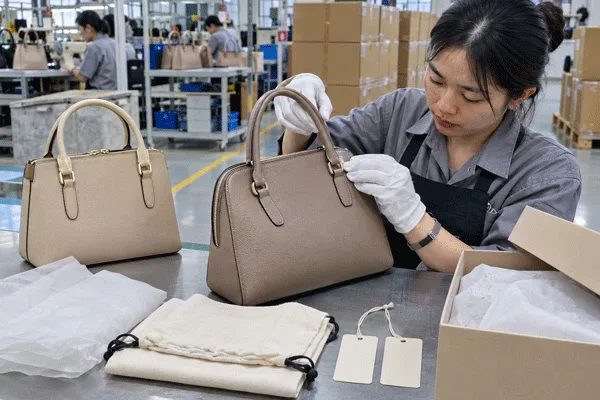
IONIA BAG was established in 2010 and provides factory-direct OEM, ODM, and private-label manufacturing services for global B2B buyers. Its business covers material selection, product development, sampling, bulk production, quality inspection, and export-ready packing.
You can learn more about its manufacturing background through the About IONIA BAG page.
A product image cannot show every detail of a finished handbag. Buyers should request a physical sample when developing a new design or making important changes to an existing product.
During sample review, pay attention to these points:
A structured leather or PU handbag may need particular attention to panel alignment, edge finishing, and shape retention. A soft shoulder design should be checked for strap comfort and how the body looks when filled.
For bulk buyers, the approved sample should become the production reference. Any later changes to material, color, hardware, or dimensions should be confirmed in writing.
IONIA BAG supports sample development based on customer drawings, reference photographs, and existing samples. Buyers can learn more through the Sample Development Service.
This step helps reduce uncertainty before mass production and makes repeat orders easier to manage.
Promotions can help retailers introduce a new product, clear seasonal inventory, or attract new customers. However, frequent heavy discounts may teach customers to wait for lower prices instead of buying at the regular retail price.
A better approach is to plan promotions around a clear commercial purpose.
For example:
Retailers should also distinguish between genuine discount opportunities and misleading product claims. A product should never be advertised as an authentic designer item unless it is genuinely authorized and can be verified.
Private-label products can compete through their own design, quality, and customer experience. They do not need another brand’s name to justify their retail price.
A good promotional strategy protects both short-term sales and long-term brand perception.
Designer Handbags Sale: How Retailers Can Source Original Designer Bags Without Counterfeit Risk
Building an original handbag collection requires a manufacturing partner who understands product development and bulk purchasing requirements.
IONIA BAG is a China-based custom bag manufacturer offering OEM, ODM, and private-label services for international buyers. We work with importers, distributors, trading companies, brand owners, private-label retailers, e-commerce sellers, promotional suppliers, corporate buyers, and lifestyle brands.
Our handbag manufacturing range includes structured handbags, shoulder bags, tote bags, and other fashion and functional designs.
We support customization in several areas:
| Customization Area | Available Project Options |
|---|---|
| Material | Leather, PU leather, canvas, and selected recycled materials |
| Structure | Shape, dimensions, gusset, and base construction |
| Carrying system | Top handles, shoulder straps, and detachable straps |
| Interior | Pockets, compartments, lining, and closures |
| Branding | Embossed logos, debossed logos, metal plates, and labels |
| Hardware | Selected hardware styles and finishes |
| Packaging | Hangtags, labels, dust bags, and export cartons |
Step 1: Discuss Your Market and Product Requirements
Tell us your target customer, product category, expected quantity, target price, and preferred design direction.
Step 2: Confirm the Product Specification
We review the materials, dimensions, structure, hardware, branding, and packaging requirements.
Step 3: Develop and Approve a Sample
A physical sample helps you evaluate the product before bulk production.
Step 4: Proceed with Bulk Manufacturing
Production follows the approved specifications, with quality checks throughout the process.
Step 5: Final Inspection and Export Packing
Finished products are checked and prepared according to the confirmed order requirements.
Whether you are launching a new fashion label, expanding an existing retail collection, or sourcing handbags for wholesale distribution, we can discuss a suitable OEM or ODM development plan.
Explore our Handbag Collection and OEM/ODM Manufacturing Solutions.
Ready to develop your own handbag collection?
Send us your reference images, drawings, material preferences, logo artwork, and estimated quantity. Our team can review your project and discuss product development, sampling, and bulk manufacturing.
Contact IONIA BAG to start your project.
IONIA BAG is a custom bag manufacturer, not an authorized reseller of third-party luxury brands. We manufacture original products and private-label handbags for B2B customers.
Yes. You can develop original fashion handbags using your own design direction, materials, colors, hardware, and branding. The design should avoid unauthorized trademarks and protected product features.
OEM production follows the buyer’s supplied design and specifications. Private-label projects generally use an existing or agreed product structure with the buyer’s own branding. ODM offers more product development support from the manufacturer.
Depending on the design and project requirements, options can include genuine leather, PU leather, canvas, and selected recycled materials. Material availability and suitability should be confirmed during development.
Yes. Custom branding can include logo embossing, debossing, metal logo plates, labels, hangtags, and selected packaging options.
Send your preferred bag style, reference images or drawings, material requirements, target dimensions, logo details, estimated quantity, and destination market. These details help the manufacturer evaluate your project and prepare a more accurate quotation.
We will reply you within 24 hours. If for urgent case, please add WhatsApp/WeChat: +86 15066236153,. Or call +86 17657177170 directly.
*We respect your confidentiality and all information are protected.
We will only use your information to respond to your inquiry and will never send unsolicited emails or promotional messages.
 last blog
