







Tout savoir sur les techniques d'impression des sacs fourre-tout : coûts de mise en place, gamme de couleurs et résistance aux lavages pour chacune d'entre elles
11 août 2026
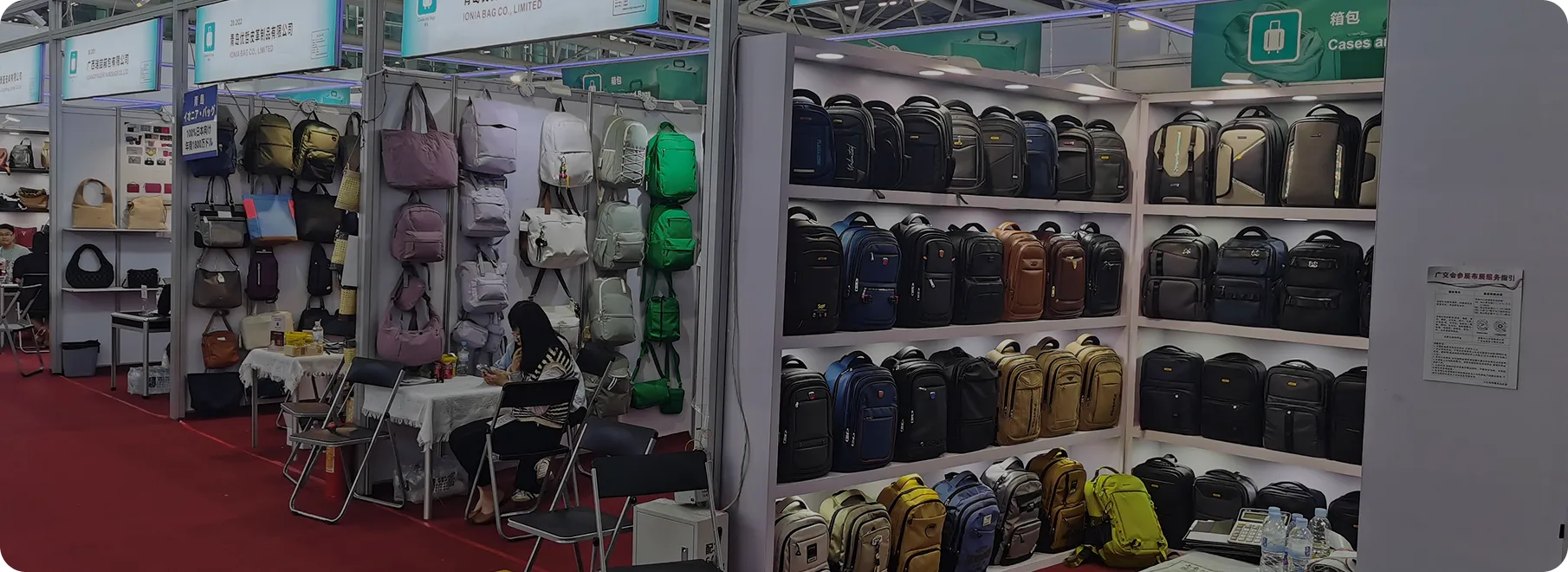
Équipe technique d'IONIA BAG | Fabrication de sacs sur mesure, IONIA BAG CO., LIMITED | Publié en août 2026
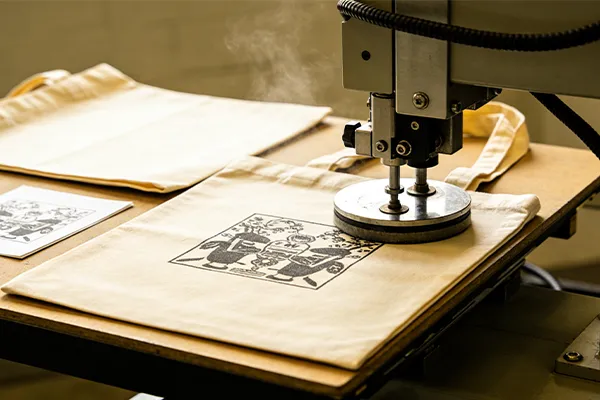
Sac fourre-tout printing means transferring artwork onto a bag panel by one of four routes: screen printing, direct-to-garment, heat transfer film, or dye sublimation. Each carries a different setup charge, color ceiling, and wash life. Fabric decides which are even available to you.
Tout savoir sur les techniques d'impression des sacs fourre-tout : coûts de mise en place, gamme de couleurs et résistance aux lavages pour chacune d'entre elles
“Printing” in a supplier quotation usually means one of the four routes above. It does not mean embroidery, woven labels, or applied patches, which are stitched or attached rather than printed, and which follow completely different cost logic. When a print shop quotes you “printing,” it is nearly always quoting the one method that shop runs in-house.
That last point matters more than the definitions. A screen-printing shop will tell you screen printing is the answer. A DTG shop will tell you DTG is. Both are describing their equipment, not your artwork. The useful framing for a brand owner is the reverse: what does the fabric permit, what does the artwork require, and what does the reorder pattern reward?
Three variables carry most of the decision, and they are the three in this article’s title. Setup cost determines your break-even quantity. Color range determines whether your artwork survives at all. Wash life determines whether a retail customer sees the print fail while still owning the bag.
| Impression écran | DTG (direct-to-garment) | Heat transfer film (incl. DTF) | Dye sublimation | |
| What physically happens | Ink pushed through a mesh screen, one screen per color, then heat-cured into the fabric | Water-based ink jetted directly onto pretreated fabric, then cured | Artwork printed onto a carrier film, then heat-pressed and adhered to the surface | Dye turns to gas under heat and bonds into polyester fiber |
| Setup charge | Per color: screen, film, press setup | Effectively none beyond file prep | Low; per-design rather than per-color | Low; per-design |
| Color ceiling | A few spot colors before setup and registration become the problem | Full color, including photographic images | Full color | Full color |
| Cost per bag as volume rises | Falls sharply; the dominant reason it survives in bulk | Roughly flat — each bag is an individual print cycle | Flat to slightly falling | Flat |
| Fabric requirement | Broad: cotton canvas, polyester, non-woven PP | Cotton or high-cotton blends; needs pretreatment | Broad, but the surface must tolerate press heat and pressure | Polyester only. Will not bond to cotton |
| Hand feel | Sits in the surface; varies by ink system | Softest of the four when done on cotton | A film layer on top of the fabric; detectable by hand | None — the dye is in the fiber, not on it |
| Wash life | Long with correct cure; eventually cracks or fades with flexing | Shortest on heavy canvas; abrades and lightens | Depends on adhesion; edge lift and cracking are the failure modes | Longest; the print cannot peel because there is no layer to peel |
| Typical failure in production | Color drift between screens, bleed into an open weave | Patchy pretreatment, dull color on dark fabric, texture showing through | Adhesive failure, visible film edge, press marks on canvas | Wrong fabric selected — nothing bonds |
| Meilleur ajustement | Repeat runs, simple artwork, any quantity above the break-even point | Very small runs, photographic art, cotton only | Small runs, complex art, mixed designs across one order | Polyester totes and full-panel coverage |
Screen printing carries a setup charge per color: a screen is burned, film is output, the press is registered. That charge is fixed. It does not care whether you order two hundred bags or twenty thousand. Ink cost per bag, by contrast, is close to negligible.
Divide a fixed number by a rising quantity and you get the entire economics of promotional and retail bag production. At low volume, setup dominates and screen printing looks expensive. Past the break-even point, setup per bag rounds toward zero and no digital method can follow it down, because every digital method charges you for a fresh print cycle on every unit.
Two consequences brand owners tend to miss:
Asking for “screen printing” leaves a real decision open. The ink system changes hand feel, opacity, and how the print ages.
Plastisol is the workhorse. It sits on the fabric surface, gives strong opacity on dark canvas, and cures reliably. The trade-off is hand feel: a heavy plastisol deposit is palpable and stiffens the printed area, which matters on a retail tote where the print covers a large panel.
Water-based ink soaks into the fibers and leaves a much softer result. It works well on light-colored cotton canvas and is often preferred for retail-positioned bags. On dark fabric its opacity is weaker, so a white underbase is usually required, which adds a pass and partly returns the stiffness you were avoiding.
Discharge ink removes the fabric’s own dye and replaces it with pigment, so the print becomes part of the fabric rather than a layer on it. The result is the softest hand available from screen printing on dark cotton. The constraint is chemistry: it needs cotton, and the final shade depends on how the fabric was originally dyed, so exact color matching requires a sample on the production fabric rather than a Pantone chip.
Ink chemistry is also where compliance lives. REACH restricts certain substances, including phthalates, in consumer articles placed on the EU market, and California Proposition 65 carries separate warning obligations. Both are general industry regulations referenced here as context rather than certifications held by any single supplier. Name your destination markets in the specification and request documentation against the specific ink system used on your order.

Tout savoir sur les techniques d'impression des sacs fourre-tout : coûts de mise en place, gamme de couleurs et résistance aux lavages pour chacune d'entre elles
DTG is often presented as the modern default: no screens, no setup, full color, order one unit. On lightweight cotton apparel that description holds up reasonably well. On a heavyweight sac fourre-tout en toile it degrades in several specific ways.
Pretreatment is the first problem. DTG needs a chemical pretreat layer for the ink to sit on, particularly for white ink on dark fabric. Heavy canvas absorbs pretreatment unevenly, and uneven pretreatment shows as patchiness or a visible rectangle around the print area after washing.
Texture is the second. Canvas has a pronounced weave. Ink jetted onto that surface follows the peaks and leaves the valleys less covered, which softens edges and mutes solid areas — the opposite of the crispness DTG is sold on.
Wash and abrasion life is the third, and for a brand owner it is the one that generates complaints. A tote is not worn; it is loaded, scuffed against surfaces, and dragged across shoulders. DTG’s ink layer is thin by design, and thin layers on an abrasive-contact surface lighten faster than a cured plastisol deposit will.
None of this makes DTG useless. For a run of twenty bags with a photographic design on a light cotton tote, it is frequently the only sensible route, because no other method absorbs that little volume without a punitive setup charge. The error is treating a small-batch tool as a production method and then being surprised by the durability.
Transfer methods print artwork onto a film and press it onto the bag. Full color, low setup, and different designs across one order all come easily, which makes them the practical answer for variable-data work, personalization, and short seasonal drops.
What you accept in exchange is a layer. The film sits on the fabric, is detectable by hand, and behaves as a discrete element that can lift at an edge or crack across a fold line. Adhesion quality varies widely by film and press parameters, and that variation is invisible at approval and obvious after twenty washes.
Two practical constraints on bags specifically:
Sublimation is the outlier because the constraint is not cost or artwork, it is chemistry. The dye bonds into polyester fibers. On cotton it simply does not stay. No press setting, no film, and no pretreatment changes that.
Where the fabric is polyester, the result is unmatched on two counts: there is no layer to peel or crack, and full-panel coverage including edge-to-edge printing becomes straightforward rather than expensive. This is why polyester shopping totes with all-over patterns are usually sublimated and cotton canvas totes almost never are.
For brand owners committed to natural-fiber canvas, sublimation is off the table from the beginning. Knowing that before the design brief is written prevents a wasted round of artwork.
Durability claims are usually stated as a number of washes, which tells you very little without the failure mechanism attached. Each method fails differently, and the mechanism determines whether the failure matters for your product.
Cure quality sits underneath all of this. An under-cured screen print will fail early regardless of ink quality, which is why the useful supplier question is not “how many washes” but “how is cure verified, and can I see a wash-tested sample on my production fabric?”
“Printing is printing — I’ll send the file and pick whichever is cheapest.”
Artwork and fabric jointly eliminate most of the options before price enters the conversation. A photographic image on heavyweight dark cotton canvas rules out sublimation by chemistry, struggles under DTG by texture and abrasion, and is impractical by screen printing at any real color fidelity. That leaves transfer film, whether or not it was the cheapest line on the quotation.
Run the elimination in this order and the price comparison at the end is between genuinely viable options rather than a list including three that were never going to work.
Blended and recycled canvas. Cotton-polyester blends and recycled fabrics accept ink differently from virgin cotton. Discharge ink in particular depends on cotton content and on the original dye, so a blend that prints beautifully in one lot may shift in the next.
Laminated and coated non-woven totes. The surface finish, not the substrate, governs. Some coatings resist ink adhesion; others deform under transfer press heat.
Bags with a printed panel crossing a seam or gusset. Printing happens before assembly in most workflows. Artwork that spans a panel join will break or distort, and the decision has to be made at specification, not at sampling.
Very dark fabric with fine light detail. A white underbase adds a pass and thickens the deposit. Thin light-colored strokes on dark canvas are the single most common cause of a print that looks correct in proof and thick in production.
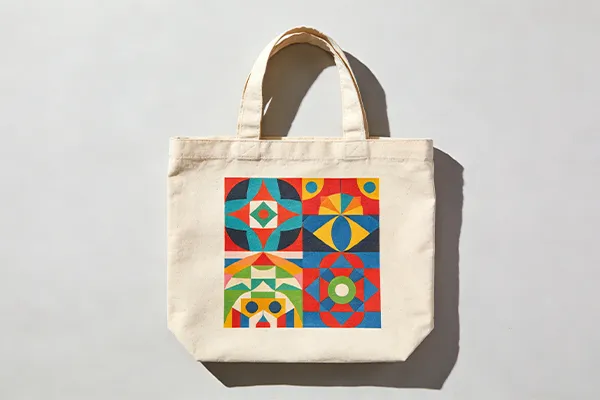
Tout savoir sur les techniques d'impression des sacs fourre-tout : coûts de mise en place, gamme de couleurs et résistance aux lavages pour chacune d'entre elles
Print method and bag construction are decided together. A brief that specifies only the artwork leaves the outcome partly undefined.
| Champ de spécification | Effect on printing | Valeur |
| Fiber content (cotton / polyester / blend) | Eliminates or enables sublimation and discharge ink outright | À confirmer selon le modèle |
| Poids du tissu | Governs ink spread, pretreatment absorption, transfer press behavior | À confirmer selon le modèle |
| Fabric color | Determines whether a white underbase is required | Spécifié par l'acheteur |
| Surface finish or lamination | Affects adhesion and heat tolerance | À confirmer selon le modèle |
| Finished dimensions and gusset | Sets the maximum print area | À confirmer selon le modèle |
| Print area and placement reference | Le point sur lequel les deux parties s'accordent pour s'opposer | À confirmer au cas par cas |
| Ink system (plastisol / water-based / discharge) | Changes hand feel, opacity, and color-matching method | À confirmer au cas par cas |
| Pantone references and tolerance | Removes color interpretation from sampling | Fourni par l'acheteur |
| Print MOQ versus bag MOQ | Screen and film minimums may differ from bag minimums | Devis établi par projet |
| Configuration et tarification à l'unité | IONIA BAG ne publie pas de fourchettes de prix | Devis établi par projet |
Most pages ranking for tote bag printing belong to print shops or blank-tote retailers running one process. The information is accurate as far as it goes, and it is structurally incapable of telling you that a different method would suit your fabric better, because that answer would send you elsewhere.
Working with a factory that controls fabric selection and decoration together changes what can be decided. The fiber content, the fabric weight, the ink system, and the placement are set in one specification and sampled on the actual production material before tooling is committed. ISO 9001 is referenced across manufacturing as a general quality-management framework rather than a product claim, and the practical comparison between suppliers is what documented steps exist between artwork approval and shipment. Ask for that documentation directly from anyone you are considering. IONIA BAG CO., LIMITED has manufactured bags from its Qingdao facility since 2010 and supports buyer-appointed third-party inspection.
A: For cotton canvas with simple artwork and repeat orders, screen printing. For photographic artwork in small quantities, transfer film or DTG. Sublimation is unavailable on cotton entirely. The fabric and the artwork narrow it before cost does.
A: Screen printing charges a fixed setup per color and then almost nothing per bag. Digital methods run an individual print cycle for every unit, so the per-bag cost stays roughly constant no matter how many you order.
A: Yes, by transfer film or DTG, with caveats. On heavyweight textured canvas both lose edge crispness, and DTG lightens with abrasion. Screen printing reproduces photographs only through halftones, which read coarse on canvas.
A: On light-colored cotton totes in small quantities, yes. On heavy canvas it is limited by uneven pretreatment absorption, weave texture, and abrasion-driven fading. It is a low-volume tool rather than a bulk production method.
A: Sublimation dye bonds into polyester fibers. Cotton has no polyester to bond with, so the color does not hold. No adjustment to press settings changes this.
A: Technically several, practically few. Each color adds a screen, a press pass, and a registration tolerance. Beyond a handful, setup cost and misalignment risk usually make transfer film the better route.
A: It depends on method, color count, print size, fabric, and quantity, and setup is charged separately from unit cost in screen printing. IONIA BAG quotes per project rather than publishing price ranges.
A: Vector artwork for screen printing, with Pantone references and the smallest element dimension in millimeters. High-resolution raster files for DTG or transfer. State which elements are fixed and which may be simplified if the process requires it.

Nous vous répondrons dans les 24 heures. En cas d'urgence, veuillez ajouter WhatsApp/WeChat : +86 15066236153,. Ou appelez directement +86 17657177170.
*Nous respectons votre confidentialité et toutes les informations sont protégées.
Nous n'utiliserons vos informations que pour répondre à votre demande et n'enverrons jamais de courriels non sollicités ou de messages promotionnels.
 dernier blog
