








Custom Women’s Leather Backpack Manufacturer: OEM, ODM & Private Label Guide
19 août 2026
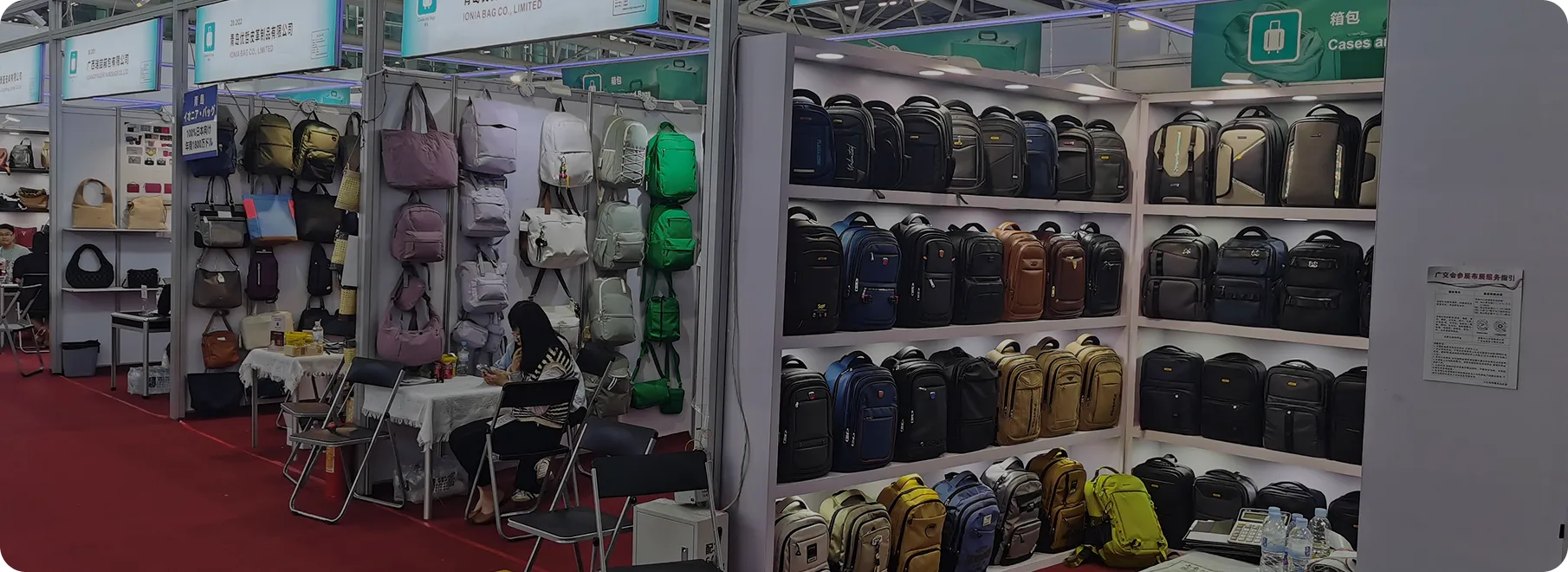
A women’s bag can look excellent in a sample yet fail in bulk when materials, sizing, hardware, or logo details are not clearly defined. That creates delays, rework, and weak product consistency. The solution is to turn your idea into a precise manufacturing brief before production starts.
A custom women’s leather backpack manufacturer helps B2B buyers develop a product around material, size, structure, hardware, branding, packaging, and order requirements. For importers and private-label buyers, the right supplier should combine clear development, repeatable production, and quality control—not simply offer the lowest unit price.
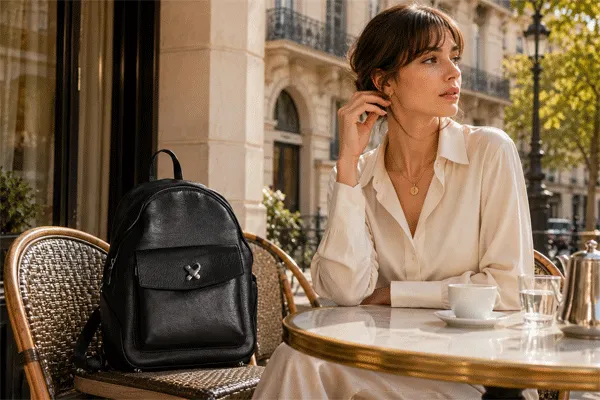
Custom Women’s Leather Backpack Manufacturer: OEM, ODM & Private Label Guide
For importers, distributors, trading companies, retailers, e-commerce sellers, and promotional suppliers, an off-the-shelf item may be quick to buy, but it gives limited control. A custom program lets you define the silhouette, color, lining, pocket layout, hardware, logo position, packaging, and customer use case. That can help your product feel connected to your brand rather than like a generic catalog item.
As a China-based custom bag manufacturer, we work from the buyer’s commercial brief. One client may need a slim city style for office customers. Another may want a larger rucksack with organized storage. A marketing agency may care about gift presentation and logo placement. Outdoor or lifestyle companies may prioritize comfort, capacity, and repeat-order consistency.
This is where custom backpacks create value. Instead of competing only on price, the buyer can shape the product around a defined customer and sales channel. A strong brief also makes sampling more efficient because every revision has a clear purpose.
For example, two buyers may begin with the same reference image but need very different results. A fashion retailer may prefer a compact shape with understated hardware, while a corporate gifting supplier may need a larger logo area and simplified packaging. Custom development allows each buyer to build for a specific market.
Material choice affects look, hand feel, cost, weight, durability, and how a product ages. Full-grain leather keeps the natural grain surface and more of the hide’s original character. Leather Naturally describes full grain leather as retaining the natural grain, while top-grain material has its surface lightly corrected. The organization also notes that well-made material can gain a distinctive patina with age.
That does not mean every premium project should use the same material. Some buyers want a more uniform finish, softer hand feel, easier color matching, or a lower target cost. Others may request genuine leather, corrected material, split material, or vegan leather as a non-animal alternative. If a buying brief simply says “finest genuine leather,” clarify exactly what that phrase means before quoting.
| Material Direction | Main Buying Goal | Ce qu'il faut confirmer |
|---|---|---|
| Full grain | Natural look and premium character | Acceptable natural markings |
| Corrected finish | More uniform surface | Finish, gloss, and color tolerance |
| Split / cost-focused option | Lower price target | Performance and construction |
| Alternative material | Non-animal positioning | Base material and testing requirements |
Because leather is a natural material, appearance can vary. The layer of the hide, finish, color process, and surface selection influence the final look. If your market expects high visual consistency, agree on an approved swatch and acceptable variation before cutting begins.
Buyers should also avoid treating terms such as “premium,” “soft,” or “high-quality” as complete technical specifications. Define thickness, surface finish, hand feel, color reference, backing, and approved sample whenever these details affect the final product.
For products sold in the United States, material descriptions deserve special attention. The U.S. Federal Trade Commission’s Leather Guides address misleading claims concerning leather and imitation materials and explain when non-leather content should be disclosed.
A useful women’s pack has to work beyond the product photo. For daily use, think about opening width, empty weight, access, internal storage, shoulder comfort, and how the product sits against the body. A stylish shape that is difficult to open or uncomfortable to carry can quickly lead to poor customer feedback.
For a model designed for daily use, the interior should match what the customer actually carries. A work or school version may need a padded laptop sleeve, phone pocket, document space, charger pocket, and secure compartment. A smaller lifestyle model may need fewer sections so the silhouette stays clean.
A leather laptop model also requires attention to reinforcement because electronics increase the load. Handle bases, shoulder connections, the bottom panel, and zipper areas may need stronger construction than those on a very small fashion bag.
Good backpack design is easy to understand. The main opening should provide useful access. The strap should adjust across the intended customer range. Stress points should be reinforced. These choices matter more than adding decorative features that do not improve function.
The goal is a product that is comfortable to carry and perfect for everyday use, while still matching the visual style expected by the target customer.
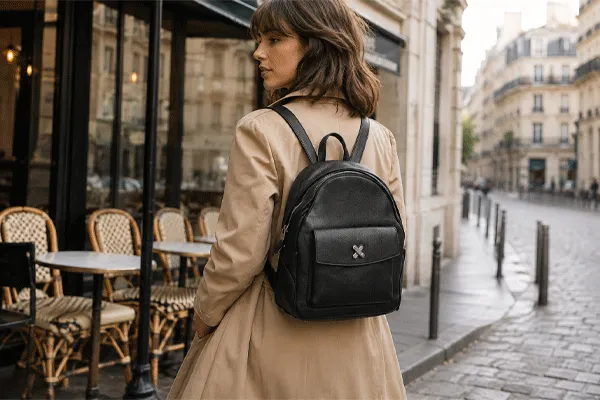
Custom Women’s Leather Backpack Manufacturer: OEM, ODM & Private Label Guide
A sac à dos en cuir personnalisé project can begin with a reference photo, sketch, physical sample, measurement sheet, mood board, or technical drawing. The manufacturer then converts that idea into a specification that can actually be produced.
A practical development flow looks like this:
Idea → Specification → Material Selection → Pattern → Sample → Review → Revision → Approved Sample → Production
If you want to design your own custom product, begin with the customer problem. Define width, height, depth, opening style, pocket structure, handle, hardware finish, lining, laptop size, logo location, and packaging.
Do not spend most of the development stage choosing colors while leaving internal construction undefined. Functional decisions usually affect patterns, material consumption, labor, and price more than a small visual change.
During backpack manufacturing, the approved sample should become the physical quality benchmark. A leather backpack made for a premium retail program may require tighter visual control than a basic promotional product. The goal is not simply to make the backpack attractive once. The real goal is to make the approved result repeatable throughout production.
This is also the right stage to clarify phrases such as made from premium material. Replace broad marketing language with measurable requirements wherever possible.
Customization can be simple or extensive. A basic project may change color, lining, zipper pulls, hardware finish, packaging, or a logo. A deeper project may modify the pattern, pocket structure, dimensions, panel construction, handles, or closure system.
Common branding methods may include embossing, debossing, metal badges, printed lining, woven labels, patches, or engraving on suitable hardware. If you want to personalize items with an initial, determine whether you need one fixed mark for the entire order or different names and initials for individual customers.
Individual personalization creates a different production workflow because order data, marking, sorting, inspection, and packing must stay connected to each final unit.
For a private label leather program, consistency should go beyond simply placing a logo on a finished item. Product shape, packaging, hangtags, dust bags, labels, carton marks, and overall presentation should support the same visual direction.
A private label backpack becomes stronger when each touchpoint feels intentional.
Sometimes a buyer only wants to customize one feature. That can make development faster and more economical. Other projects need a fully customized shape because the buyer wants clearer market differentiation.
If you want to design custom products for a collection, first identify which features should remain consistent across different SKUs. Shared hardware, colors, labels, and packaging can create a more recognizable product family.
The phrase handmade leather can describe many production methods. Some products rely heavily on manual cutting, stitching, edge finishing, or handcraft techniques. Others combine machinery with skilled manual operations.
For B2B buyers, the important question is not whether every operation is performed by hand. The better question is whether the chosen method can consistently achieve the approved appearance and construction at the required quantity.
A handmade leather backpack may include artisan-style details such as hand-finished edges, decorative stitching, or special surface treatment. Those details can bespeak a premium position, but they may also increase labor and natural variation.
Before approving such details for bulk orders, evaluate whether they can be reproduced consistently.
Good craftsmanship is visible in:
Skilled craftsmanship also matters where customers cannot immediately see it. Reinforcement beneath handles, internal seams, folded edges, and load points can affect how the finished product performs.
Whether backpacks are crafted with more manual work or more machine-assisted processes, the approved sample should remain the quality reference.
A commute model should balance capacity with a clean profile. Buyers may specify a protected computer section, fast-access pocket, secure closure, and controlled empty weight. Laptop backpacks need enough structure to support contents without becoming excessively bulky.
For travel, capacity and organization become more important. A leather travel design may need stronger carrying points, wider openings, luggage-friendly pockets, and clearer internal separation.
Some buyers prefer travel backpacks with a top handle, while others want a softer rucksack profile. The right travel companion depends on how the final customer moves through airports, trains, offices, hotels, and everyday city environments.
Lifestyle collections can also connect the main product with a handbag, tote, tote bags, or leather duffle. Shared colors, hardware, linings, and logo details help the group look intentional.
In this way, one successful leather bag can become the starting point for a broader leather goods collection without requiring every product to have a completely unrelated visual language.
Quality control should begin before mass production rather than only when cartons are ready to ship.
Start with the approved material and sample. Then define checkpoints for dimensions, stitching, edge finishing, hardware, zipper movement, lining, pocket position, logo, color, shoulder attachments, packaging, and SKU quantity.
If your specification requires YKK zippers, a certain buckle finish, a particular lining construction, or another named component, include it in the bill of materials instead of relying on a verbal request.
The same rule applies to reinforcement, a padded computer sleeve, special packaging, or decorative hardware. Written specifications reduce interpretation.
Responsible sourcing can also matter to importers and retailers. Leather Working Group’s current Leather Manufacturer Standard covers 17 audit sections, including facility information, permits, production data, traceability, environmental management, and related controls; certification is valid for two years. This does not mean a specific bag factory or tannery holds that certification, so buyers should request documents for any certification claim.
A useful inspection checklist includes:
A quality leather product is not simply the item made from the most expensive material. It is the product that matches the agreed specification consistently.
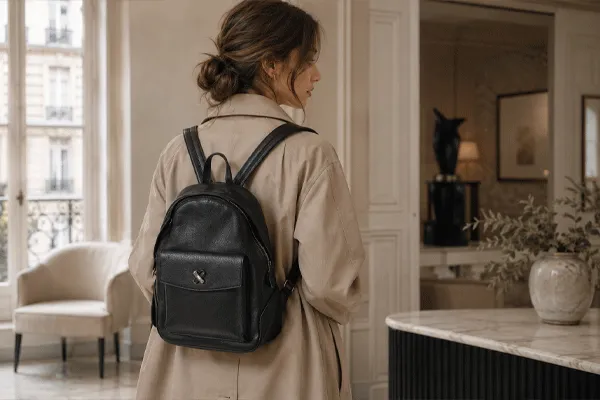
Custom Women’s Leather Backpack Manufacturer: OEM, ODM & Private Label Guide
Before choosing a leather backpack manufacturer, send each candidate the same structured RFQ. Include product images or drawings, dimensions, material direction, quantity, branding method, packaging, destination market, required testing, and sample expectations.
This makes quotations much easier to compare.
| RFQ Item | Information the Buyer Should Provide |
|---|---|
| Produit | Women’s pack, rucksack, or laptop model |
| Matériau | Type, finish, color, lining |
| Construction | Pockets, compartment, strap, reinforcement |
| L'image de marque | Emboss, badge, print, label, engraving |
| Emballage | Polybag, dust bag, retail box, carton marks |
| Commercial | Quantity, destination, repeat orders |
| Qualité | Approved sample, tolerance, inspection points |
Ask how OEM and private label projects are handled, how design revisions are recorded, and how the supplier manages consistency from sample approval to production.
If your brief includes terms such as “high-quality,” “professional leather,” or “premium,” translate those words into material specifications, construction requirements, or an approved visual reference. That helps both parties evaluate the same target.
Price is important, but it should not be isolated from material, construction, packaging, quality requirements, and order quantity. Two quotations can appear to describe the same product while actually covering different specifications.
As a China-based custom bag manufacturer serving global B2B buyers, we focus on converting commercial requirements into an OEM, ODM, or private-label development brief.
If you want to make your custom leather backpack, provide your target market, reference design, expected quantity, material direction, branding requirements, packaging, and key functions. That gives the manufacturer enough information to evaluate the project properly and discuss the next development step.
Yes. Buyers can discuss dimensions, material, color, lining, pocket layout, hardware, logo application, packaging, and other details as part of a custom development brief.
The exact possibilities depend on construction and sourcing. Sending a reference sample, drawing, or product image gives the supplier a clearer basis for evaluation.
No. Full grain keeps more natural surface character, but some markets prefer a smoother, more uniform finish, lower weight, or different cost structure.
Over time, well-made natural material may change in appearance; the surface develops a rich patina in some types and finishes. The right choice depends on customer expectations, performance, appearance, and cost rather than one material label alone.
It may be possible, but customer-by-customer marking differs from ordinary bulk logo production.
A personalized leather backpack with different initials may require additional data management, marking, production tracking, sorting, and packing. Discuss the workflow before offering individual customization to your customers.
OEM generally means manufacturing according to a buyer-defined specification. ODM usually involves more development or design input from the manufacturer. Private label focuses on selling the finished product under the buyer’s name.
In real sourcing projects, these models often overlap.
A black leather direction is widely used for business and lifestyle designs, but available shades depend on the selected material, finish, and sourcing plan.
Confirm the final shade with an approved swatch. If the surface includes natural markings or is expected to age naturally, agree on acceptable visual variation before production.
Prepare reference images or drawings, dimensions, material preference, estimated quantity, logo method, packaging requirements, destination market, and any testing requirements.
If you want a carefully made leather backpack, the clarity of the brief matters as much as the visual concept. A vague inquiry usually creates a vague quotation.
Nous vous répondrons dans les 24 heures. En cas d'urgence, veuillez ajouter WhatsApp/WeChat : +86 15066236153,. Ou appelez directement +86 17657177170.
*Nous respectons votre confidentialité et toutes les informations sont protégées.
Nous n'utiliserons vos informations que pour répondre à votre demande et n'enverrons jamais de courriels non sollicités ou de messages promotionnels.
 dernier blog
