









Questions essentielles à poser à un fabricant de sacs sur mesure avant le premier contact : une liste de contrôle pour l'usine
30 juin 2026
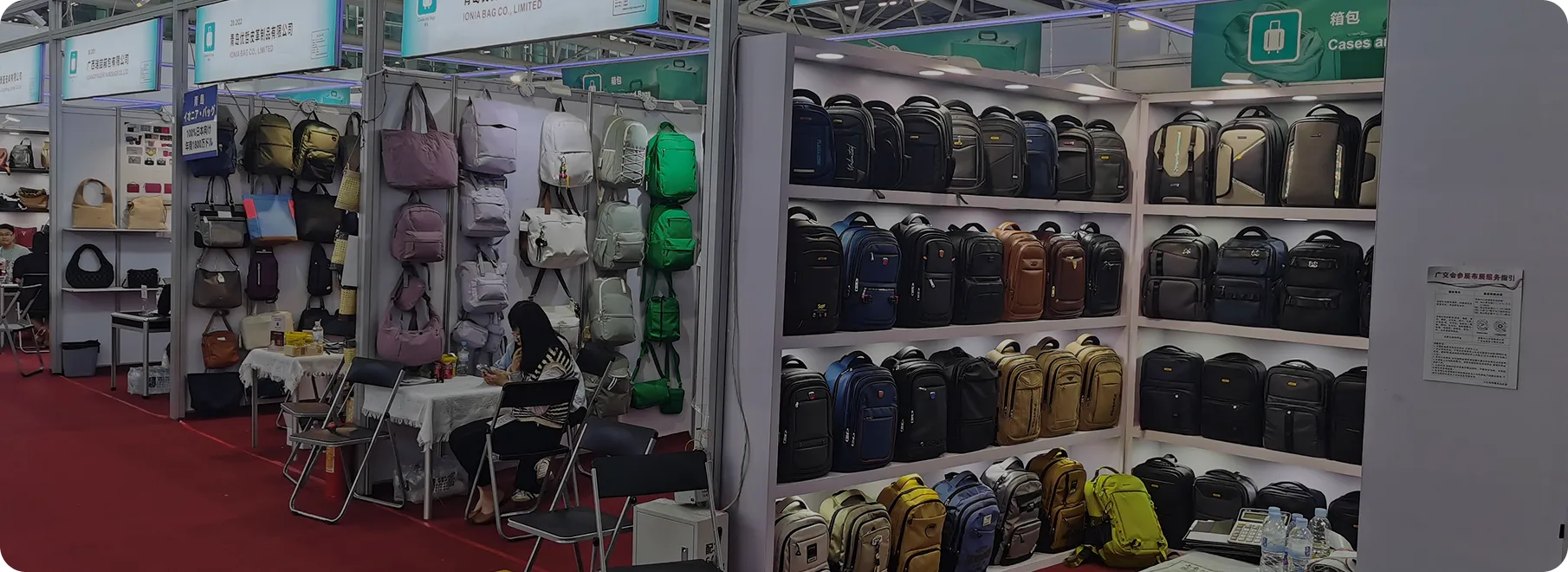
De nombreux projets de création de sacs échouent avant même le début de la phase d'échantillonnage : cahier des charges flou, coûts cachés, modifications de dernière minute. Un simple malentendu peut entraîner des retards, des retouches et le non-respect des dates de lancement. La solution est simple : préparez des informations claires avant de contacter l'équipe de production.
Avant de contacter un fabricant de sacs, préparez votre idée de produit, le profil de votre client cible, des images de référence, les choix de matériaux, les dimensions, les fonctionnalités, la quantité commandée, les besoins en matière d'emballage, le calendrier, la fourchette budgétaire et vos attentes en matière de qualité. Un cahier des charges clair permet à l'usine de vérifier la faisabilité du projet, d'estimer les coûts de production, de proposer des améliorations et de vous fournir un devis plus rapide et plus précis.
Lorsque vous contactez un usine de sacs Si vous n’avez qu’une idée vague de ce que vous recherchez, la réponse est souvent tardive ou trop générale. L’équipe ne saura peut-être pas si vous avez besoin d’un cartable, d’un sac de voyage, d’un cabas tendance, d’un sac de sport, d’une trousse de maquillage, d’un sac isotherme ou d’un sac à dos technique pour les activités de plein air. Il est alors difficile d’évaluer les matériaux, la main-d’œuvre, le prix et les délais.
En tant que fabricant chinois spécialisé dans la production OEM, ODM et de sacs sous marque de distributeur, nous constatons souvent que les acheteurs perdent du temps parce que leur premier message est trop succinct. “ Veuillez nous faire un devis pour ce sac ” ne suffit pas. Un message plus pertinent serait : “ Nous recherchons un sac à dos de voyage de 20 L destiné à la vente au détail dans le secteur des activités de plein air, en polyester 600D ou en nylon, avec un compartiment pour ordinateur portable, une finition imperméable, un écusson avec logo, une commande d'essai de 1 000 pièces et un lancement prévu en septembre. ”
Une bonne préparation est la clé d'une production fiable. Elle permet également à votre équipe de comparer les fournisseurs de manière équitable. Si chaque candidat reçoit le même cahier des charges clair, vous pourrez comparer les prix, les délais de réalisation des échantillons, la qualité du service et les propositions techniques avec moins d'incertitudes.
Avant de contacter un fabricant, définissez l'objectif de votre marque. Souhaitez-vous créer une gamme de voyage haut de gamme, une collection promotionnelle à bas prix, un produit de marque propre destiné à la grande distribution ou un produit phare pour le commerce en ligne ? Chaque objectif a une incidence sur les matériaux, la structure, l'emballage et le prix.
Votre stratégie produit devrait inclure :
| Point à clarifier | Pourquoi cela compte ? |
|---|---|
| Client cible | Permet de déterminer la taille, le style et la fonction |
| Canal de vente | Vente au détail, Amazon, vente en gros, cadeaux ou usage professionnel |
| Niveau des prix | Guides sur les tissus, les accessoires et la qualité de fabrication |
| Positionnement de la marque | Haut de gamme, pratique, écologique, pour l'extérieur, tendance ou professionnel |
| Plan de lancement | Permet d'estimer les délais liés à l'échantillonnage et au traitement en masse |
Une orientation claire de la marque aide également l'équipe à proposer de meilleures options. Par exemple, un sac fourre-tout promotionnel peut nécessiter une structure simple et un faible coût. Un sac à dos professionnel haut de gamme peut, quant à lui, nécessiter une meilleure doublure, des sangles plus résistantes, un rembourrage pour ordinateur portable et des finitions plus soignées. Même catégorie. Conception très différente.
Vous devez bien connaître le sac avant de demander à d'autres de le fabriquer. Cela ne signifie pas que vous devez en connaître tous les détails techniques. Cela signifie simplement que vous devez en comprendre l'usage principal. Les utilisateurs y transporteront-ils des ordinateurs portables, des courses, des vêtements de sport, des cosmétiques, des outils, des accessoires pour animaux de compagnie ou des affaires de voyage ?
Commencez par des questions simples posées par les utilisateurs :
Cette étape permet à chacun d'y voir clair. Si le sac est destiné à contenir des objets lourds, les points de contrainte doivent être renforcés. S'il est destiné au voyage, le confort et la capacité de rangement sont essentiels. S'il est destiné à la présentation en magasin, la forme et la couleur peuvent primer sur la présence de poches supplémentaires.
De bonnes images de référence sont très utiles. Elles permettent d'apprécier le style, la structure, la disposition des poches, la forme des poignées et l'impression générale que dégage le produit. Vous pouvez partager des photos de produits, des croquis, des captures d'écran, des moodboards ou des exemples proposés par la concurrence. Mais attention : « référence » ne signifie pas « copie ».
Pour les commandes B2B, nous vous recommandons d'ajouter à chaque image des remarques telles que :
Cela facilite la création de modèles sur mesure tout en réduisant les risques liés à la propriété intellectuelle et à la contrefaçon. Cela permet également au fournisseur de mieux cerner vos goûts. Le meilleur résultat n'est pas toujours une copie conforme. Souvent, il s'agit d'un modèle pratique, adapté à votre marché, à votre gamme de prix et à la réputation de votre marque.
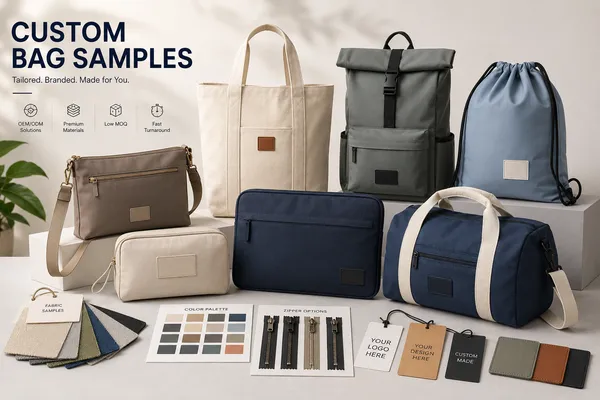
A fiche technique Il s'agit d'un dossier présentant le produit. Il peut inclure des croquis, les dimensions, les matériaux, les couleurs, le procédé d'impression du logo, les détails des poches, les accessoires métalliques, les étiquettes, l'emballage et les exigences en matière de tests. Pour les sacs simples, un document succinct peut suffire. Pour les sacs plus complexes, un dossier détaillé est nettement préférable.
Votre dossier doit comporter, dans la mesure du possible, des mesures précises :
| Détails | Exemple |
|---|---|
| Taille du sac | 45 × 30 × 15 cm |
| Chute de la poignée | 22 cm |
| Bandoulière | Réglable de 90 à 140 cm |
| Poche frontale | 24 × 18 cm |
| Taille du logo | 6 × 3 cm |
| Emballage en carton | 50 pièces par carton |
Ne vous inquiétez pas si votre premier fichier n'est pas parfait. Un bon partenaire de fabrication pourra vous aider à l'améliorer. Mais plus vous fournirez de détails, moins il y aura de risque de malentendu. Cela est particulièrement important pour les acheteurs de marques de distributeur, qui ont besoin que le produit final corresponde à une fiche produit ou à une image de catalogue.
Questions essentielles à poser à un fabricant de sacs sur mesure avant le premier contact : une liste de contrôle pour l'usine
Les matériaux déterminent l'aspect, le prix et la durée de vie d'un sac. Parmi les choix les plus courants, on trouve le polyester, la toile, le cuir PU, le tissu recyclé, le coton, le feutre, la maille et le nylon. Chaque matériau présente un toucher, une résistance, un poids et un prix différents.
Vous devez également prévoir les accessoires et les détails de couture. Ces petits éléments ont une incidence sur l'expérience utilisateur :
Pour les sacs destinés à porter des charges lourdes, la qualité des coutures est primordiale. Les poignées, les bandoulières, les coins du fond et les ouvertures des poches sont des zones particulièrement sollicitées. C'est là que le savoir-faire artisanal prend tout son sens. Un extérieur soigné, c'est bien. Un intérieur solide, c'est mieux.
De nombreux acheteurs commencent par s'enquérir du prix. C'est tout à fait normal. Mais le prix dépend fortement de la quantité commandée. Une quantité minimale de commande (QMC) faible peut être envisageable pour des sacs simples ou des matériaux courants. En revanche, un tissu spécial, une couleur personnalisée, des ferrures moulées ou un emballage sous marque propre peuvent nécessiter une quantité minimale de commande plus élevée.
Suivez ce guide simple :
| Type de commande | Objectif courant des acheteurs | Ce qu'il faut confirmer |
|---|---|---|
| Exemple de commande | Conception et exécution des essais | Coût et durée du prélèvement |
| Ordonnance de mise en jugement | Évaluation de la réaction du marché | Quantité minimale de commande et prix unitaire |
| Commande récurrente | Article qui se vend bien | Remises sur les achats en gros et gestion des stocks |
| Programme de grande envergure | Distributeur ou chaîne de magasins | Capacité de production et calendrier de livraison |
Vous devriez également vous renseigner pour savoir si le fabricant est en mesure de gérer le volume de vos commandes pendant la haute saison. Par exemple, un projet de cadeaux d'entreprise peut nécessiter une livraison rapide avant un événement. Un acheteur du commerce de détail peut avoir besoin de livraisons échelonnées. Une marque de plein air peut avoir besoin d'une planification saisonnière plusieurs mois à l'avance.
Un cahier des charges précis permet d'obtenir un devis plus exact. Si votre message précise les dimensions, le matériau, la quantité, le logo, l'emballage et le pays de livraison, notre équipe pourra établir une estimation des coûts plus rapidement. En l'absence de ces informations, le prix initial pourrait être modifié ultérieurement.
Renseignez-vous sur :
N'oubliez pas que le prix le plus bas n'est pas toujours le plus avantageux. Des échantillons de mauvaise qualité, des retards de livraison, des coutures mal réalisées ou un emballage inadapté peuvent entraîner des coûts de production cachés. Une bonne préparation vous permet d'éviter les modifications inutiles et de réduire les erreurs coûteuses.
La qualité ne se décide pas à la fin. Elle commence dès le choix des matières, la conception des patrons, la coupe, la couture, les finitions et l'emballage. Une équipe sérieuse doit expliquer clairement ses étapes de contrôle qualité. L'ISO décrit la norme ISO 9001 comme une norme de gestion de la qualité axée sur les attentes des clients, le contrôle des processus et l'amélioration continue.
Renseignez-vous sur :
| Scène | Ce qu'il faut vérifier |
|---|---|
| Contrôle des matériaux | Couleur, grammage et défauts du tissu |
| Découpe | Précision géométrique et tolérance dimensionnelle |
| Couture | Résistance et finition des coutures |
| Contrôle en ligne | Problèmes constatés au cours de la production |
| Vérification finale | Dimensions, logo, fonctionnalité, emballage |
| Contrôle des cartons | Quantité, étiquette, marques d'expédition |
Pour les commandes importantes, vous pouvez demander des photos, des vidéos ou des rapports d'inspection qualité, ou encore faire appel à un organisme tiers pour l'inspection. Vous pouvez également demander s'il est possible d'effectuer une visite sur place ou de suivre une visite guidée de l'usine par vidéo. Cela permet d'instaurer un climat de confiance, en particulier lorsque vous prenez des décisions d'approvisionnement depuis un autre pays.
Questions essentielles à poser à un fabricant de sacs sur mesure avant le premier contact : une liste de contrôle pour l'usine
Lorsque comparer les fabricants potentiels, ne vous fiez pas uniquement au catalogue. Tenez compte de la rapidité de communication, de la logique des échantillons, des suggestions en matière de matériaux et de l’attitude face à la résolution des problèmes. Un bon producteur pose des questions. Un mauvais se contente de dire “ oui ” à tout.
Voici un tableau de score simple :
| Point d'évaluation | Panneau « Faible risque » | Panneau d'avertissement |
|---|---|---|
| Communication | Des réponses claires et des conseils pratiques | Des promesses vagues |
| Échantillonnage | Explique les modifications et les limites | Envoie l'échantillon sans vérifier les détails |
| Matériaux | Propose différentes options | Ne pousse qu'un seul tissu |
| Qualité | Présente les processus et les contrôles | Évite les questions relatives à la qualité |
| Expérience | Présente des exemples de produits | Aucun cas similaire |
| Éthique | Faire preuve de transparence concernant les règles en vigueur sur le lieu de travail | Pas de réponse concernant les normes du travail |
Si votre marque vend ses produits à des détaillants ou à des entreprises, renseignez-vous sur ses anciens clients, son expérience en matière d'audit et ses pratiques de travail éthiques. L'OCDE souligne que les chaînes d'approvisionnement dans les secteurs de l'habillement et de la chaussure peuvent être complexes et comporter des risques liés au travail, aux droits de l'homme, à l'environnement et à l'intégrité ; il est donc essentiel de faire preuve de diligence raisonnable pour garantir un approvisionnement responsable.
Le développement d'un produit ne se résume pas à la fabrication d'un seul échantillon. Il s'agit d'un véritable processus. Dans un premier temps, l'équipe étudie votre cahier des charges. Elle vérifie ensuite la faisabilité du projet, prépare les matériaux, réalise un patron, fabrique un échantillon, examine le résultat et peaufine les détails.
Voici à quoi peut ressembler un processus de fabrication de sacs classique :
Ce processus permet de fabriquer des sacs de grande qualité. Il vous aide également à préserver l'image de votre marque sur le long terme. D'après notre expérience en tant que fabricant de sacs sur mesure, les meilleurs acheteurs ne sont pas toujours les plus gros acheteurs. Ce sont ceux qui font preuve de la plus grande clarté. Ils se préparent, posent des questions, analysent et s'améliorent.
Voici les questions essentielles à vous poser avant d'envoyer votre première demande. Vous pouvez vous en servir comme d'une petite liste de contrôle interne :
C'est là l'essentiel lorsqu'il s'agit de poser les bonnes questions. Cela vous aide à passer d'une idée vague à un véritable projet. Cela permet également au fabricant de sacs le plus adapté de vous donner des conseils utiles, plutôt que de se contenter de deviner.

Questions essentielles à poser à un fabricant de sacs sur mesure avant le premier contact : une liste de contrôle pour l'usine
Pour les importateurs, les distributeurs, les vendeurs en ligne, les entreprises spécialisées dans les produits promotionnels, les acheteurs professionnels et les marques lifestyle, la Chine reste une destination de choix pour l’approvisionnement en sacs personnalisés grâce à sa chaîne d’approvisionnement en matériaux bien établie, à ses équipes de couturiers qualifiés et à sa flexibilité Services OEM/ODM.
Un fabricant de sacs à main ou de sacs à dos basé en Chine peut souvent vous aider dans les domaines suivants :
L'essentiel est de choisir le bon partenaire. Il ne suffit pas de rechercher uniquement un prix bas. Vous avez besoin d'un fabricant de sacs fiable qui comprenne votre marché, protège votre concept et vous accompagne dans vos commandes récurrentes. À long terme, ce type de partenaire stratégique peut aider votre marque à se lancer plus rapidement et à vendre en toute confiance.
Veuillez nous indiquer le type de sac, ses dimensions, la quantité souhaitée, le matériau envisagé, les spécifications relatives au logo, des photos de référence, vos besoins en matière d'emballage, le prix cible (si vous en disposez) et les délais de livraison. Un message clair permet de gagner du temps et aide notre équipe à vous fournir une réponse pertinente.
Oui. Vous pouvez commencer par des photos, des croquis ou un simple cahier des charges écrit. Toutefois, pour les sacs complexes, il est préférable d'utiliser un dossier technique, car cela permet de réduire les erreurs et d'accélérer la réalisation des échantillons.
Les prix peuvent varier en fonction de la qualité du tissu, de la doublure, des accessoires, des normes de main-d'œuvre, de la quantité commandée, de l'emballage, du niveau de contrôle qualité et des conditions d'expédition. Comparez toujours l'offre dans son ensemble, et pas seulement le prix unitaire.
Pour les sacs simples, un ou deux cycles de production peuvent suffire. Pour les produits complexes destinés à la vente au détail, plusieurs cycles de production d'échantillons peuvent être nécessaires. L'objectif est de vérifier les dimensions, le fonctionnement, l'aspect et la qualité du produit avant de passer à la production en série.
Examinez attentivement les échantillons, vérifiez les coutures et les points de contrainte, renseignez-vous sur les étapes de contrôle, demandez des photos ou des vidéos, et envisagez de faire appel à un organisme tiers pour les commandes importantes. Vous pouvez également tester le sac en le chargeant réellement.
Les deux options sont envisageables. Une usine peut vous permettre d'exercer un contrôle direct sur la production. Une société de négoce peut quant à elle vous offrir un choix plus large de fournisseurs. Le choix le plus approprié dépend des exigences de votre projet, de vos besoins en matière de communication et de votre gamme de produits.



Nous vous répondrons dans les 24 heures. En cas d'urgence, veuillez ajouter WhatsApp/WeChat : +86 15066236153,. Ou appelez directement +86 17657177170.
*Nous respectons votre confidentialité et toutes les informations sont protégées.
Nous n'utiliserons vos informations que pour répondre à votre demande et n'enverrons jamais de courriels non sollicités ou de messages promotionnels.
 dernier blog
