









Shoulder Bag Guide: Shoulder Bags for Women, Designer Shoulder Bags & Handbag Design
9 de setembro de 2026
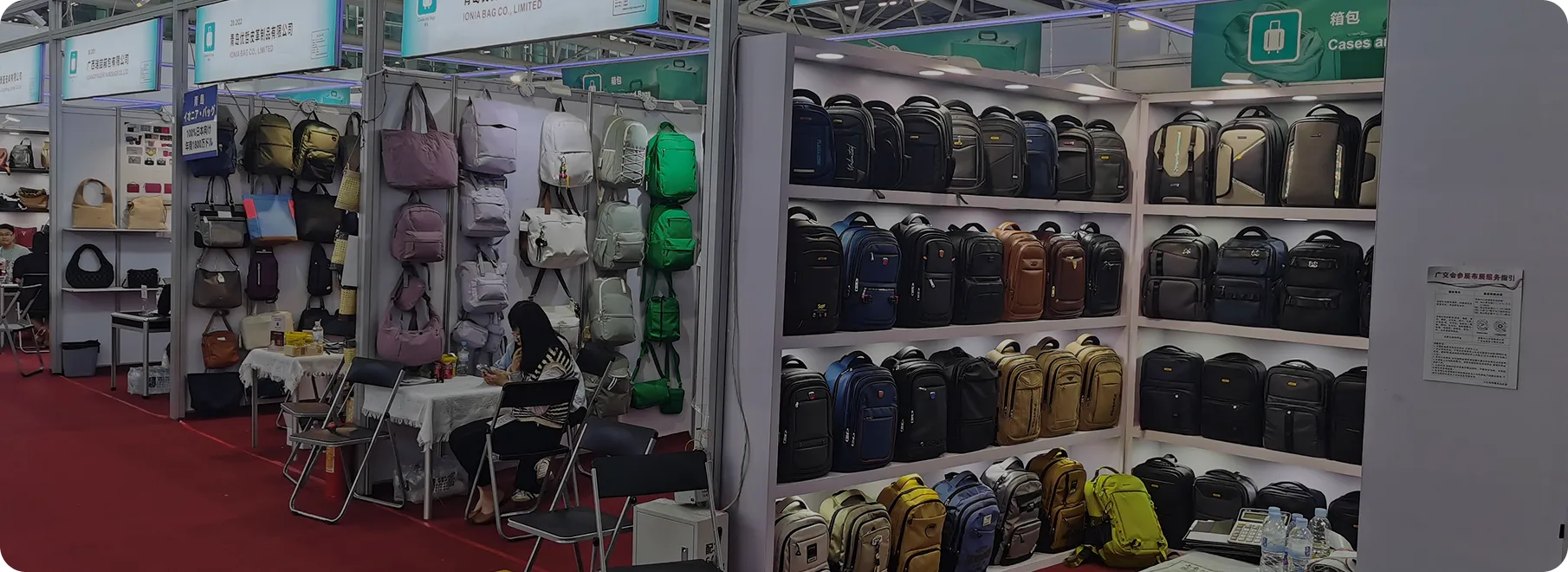
A beautiful shoulder bag can still fail in the market if the strap slips, the opening feels awkward, or the inside cannot hold daily items. For brands and bulk buyers, the challenge is not simply choosing a fashionable shape. It is turning style, comfort, quality, and price into one product customers want to use again.
A good shoulder bag combines comfortable carrying, useful storage, reliable construction, and a clear visual identity. For brands developing shoulder bags for women, the best design depends on the target customer, material, size, strap structure, closure, hardware, price point, and daily use case. These same factors should guide OEM, ODM, and private-label development before a bulk order is placed.

Shoulder Bag Guide: Shoulder Bags for Women, Designer Shoulder Bags & Handbag Design
The best shoulder bag is rarely the one with the most complicated design. Customers normally judge it through simple daily moments. Does it sit comfortably under the arm? Can they open it with one hand? Does it hold a phone, wallet, keys, cosmetics, and other everyday essentials without becoming bulky?
For everyday use, we normally look at four parts during product development:
| Design Factor | What the Customer Feels | What the Buyer Should Check |
|---|---|---|
| Tamanho | Enough space without excess bulk | Target dimensions and usable capacity |
| Abertura | Easy access to belongings | Zipper, magnetic snap, flap, or drawstring |
| Correia | Fácil de transportar | Width, drop length, reinforcement |
| Interior | Better organization | Lining, pocket, zipper compartment |
| Acessórios | Quality and durability | Buckles, rings, zipper sliders, plating |
| Forma | Fashion and practicality | Structure, base, gusset, silhouette |
A small everyday design may need only one main compartment and one internal pocket. A work-oriented model may require more structure, while a relaxed weekend design can use a softer body.
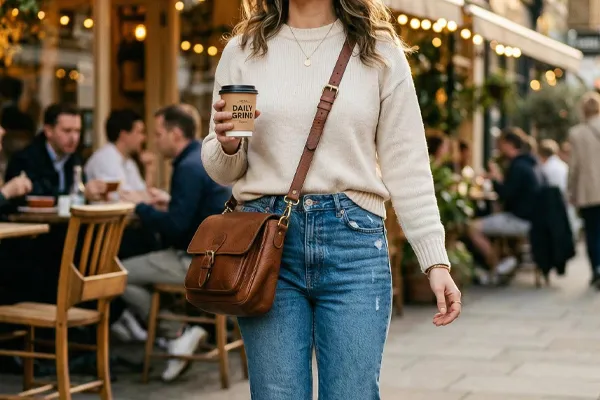
The shoulder strap matters more than many first-time buyers expect. A fixed strap creates a cleaner appearance, while an adjustable strap gives the user more flexibility. An adjustable shoulder strap can also help one design serve customers with different heights and styling preferences.
For an importer or private-label brand, these details are essential because repeat orders often come from products that feel easy to live with, not products that simply look attractive in a photograph.
Material changes almost everything: appearance, hand feel, structure, weight, cost, care requirements, and the customer’s perception of value.
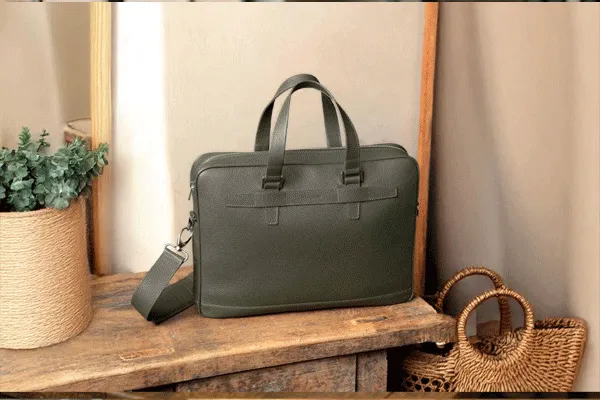
A classic leather shoulder bag may suit a premium office, lifestyle, or fashion collection. A shoulder bag in smooth leather creates a clean surface and can support minimalist designs. By comparison, a bag in grain leather or bag in grained calfskin has more visible texture and can help hide minor surface marks during normal use.
There are many other positioning options:
A suede shoulder bag usually creates a softer visual mood than smooth leather. Raffia feels seasonal and casual. Jacquard can become part of a brand’s signature pattern system.
For private-label development, material should follow the customer’s price point and use case rather than being chosen only because it looks fashionable in a mood board.
A brand rarely needs only one silhouette. Different customers buy bags for different moments, which is why a strong collection may combine a bolsa tote, shoulder model, crossbody bag, and smaller evening style.
A tote normally emphasizes capacity and easy access. It works well for office items, shopping, travel, or daily commuting. Some customers want a structured tote, while others prefer a soft and relaxed shape.
A hobo bag takes a different approach. Its curved, relaxed body creates a more casual fashion statement. A leather hobo bag can feel sophisticated while remaining comfortable. A softer leather hobo or slouchy hobo bag can work especially well when customers prefer an unstructured silhouette.
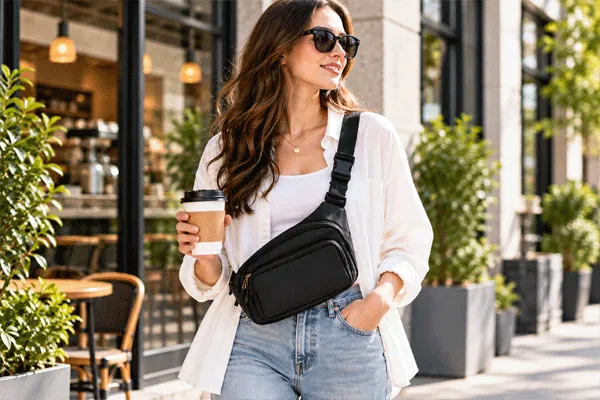
Then there is the crossbody category. A leather é aquela que parece fácil, tem aparência atual e funciona na vida real. Guias de compra atuais da Travel + Leisure e InStyle continuam recompensando bolsas que são leves, seguras, espaçosas o suficiente para as necessidades diárias e simples de usar ao longo do dia. A cobertura da Vogue na primavera de 2026 também mostra que a moda está inclinando-se para formas compactas e práticas, pequenas pochetes, formas relaxadas e bolsas refinadas do dia a dia em vez de designs pesados e excessivamente complicados. gives users a more hands-free experience. A compact leather crossbody can work for travel, city walks, shopping, and events. A quilted crossbody bag adds surface texture and a more fashion-oriented appearance.
Other silhouettes worth considering include:
| Estilo | Main Character | Utilização comum |
|---|---|---|
| Mala tipo balde | Rounded, casual | Weekend and lifestyle |
| Satchel | Structured | Work and smart casual |
| Baguette | Long, compact | Fashion and evening |
| Pochette | Small and minimal | Events and light carry |
| Sling | Close to body | Travel and urban use |
| Top handle bag | Structured and polished | Office or occasion |
| Crescent shape | Curved and modern | Daily fashion |
There is no universal winner. A brand should choose the silhouette that matches its customer, retail price, season, and channel.

Shoulder Bag Guide: Shoulder Bags for Women, Designer Shoulder Bags & Handbag Design
Size affects both fashion and function.
A mini shoulder bag works when the customer wants to carry only a phone, cards, keys, and a few small personal items. A mini shoulder silhouette also gives fashion brands more freedom to experiment with unusual shapes, bright colors, decorative hardware, and chain shoulder details.
A mini leather shoulder bag can sit at a higher perceived value than a simple fabric mini bag, but material alone does not decide whether the product succeeds. Proportion matters. Hardware should not look oversized, and the opening still needs to be usable.
At the other end of the range, a large shoulder bag should be designed around load and comfort. A larger body often needs better reinforcement at the strap shoulder connection, a stronger base, and a wider carrying strap.
Between those two sits the medium leather shoulder bag, often a practical choice for daily collections because it can balance fashion with useful capacity.
A possible range strategy looks like this:
MINI              MEDIUM                    LARGE
Fashion  █████    Fashion  ████             Fashion  ███
Capacity ██       Capacity ████             Capacity █████
Daily    ███      Daily    █████            Daily    ████
Travel   ██       Travel   ███              Travel   █████
The point is not that one size is better. The point is to create a clear role for each SKU.
For example, a saddle shoulder bag in leather may work well in a medium size, while a soft crescent shoulder bag can be developed in both small and medium formats.
When buyers research shoulder bag styles, they often encounter a very wide mix of generic product terms, fashion descriptions, and branded searches.
Generic commercial descriptions may include:
These phrases tell us something useful about customer intent. Some searches focus on color. Some focus on material. Others focus on carrying method or silhouette.
A buyer building a collection of sacos de ombro should therefore avoid treating every SKU as a separate idea. A more efficient approach is to build a visual system.
Por exemplo:
Core body → three materials → four colors → two strap options
One body pattern can sometimes support several commercial variations without rebuilding the entire product from zero.
That can help a brand create a more coherent assortment while controlling sampling work.
Consumers also search for recognizable designer products such as Kate Spade New York, Marcie Medium Saddle Shoulder Bag, YSL quilted leather shoulder bag, Jamie Mini YSL Quilted Leather, Re-Edition 2005 Saffiano Leather, or Rodeo Medium Leather.
These are third-party brand and product references, not generic product specifications and not indications of affiliation with our factory.
For private-label development, they should be treated as market-research signals rather than designs to copy. A buyer may shop designer shoulder bags to understand current proportions, materials, or functionality, but an OEM project should develop its own silhouette, pattern, branding, hardware, and visual details.
That creates a stronger long-term brand asset.
Customer reviews often reveal useful product-development information that cannot be seen in a technical drawing.
Recent feedback shared around several fashion bags highlighted three simple ideas:
The bag feels practical for shopping.
Another customer praised the quality and especially liked how spacious the bag felt.
A third customer focused less on technical details and more on emotion—she liked the bag enough to imagine building future outfits around it.
For manufacturers and B2B buyers, those comments are useful because they show three different layers of value:
A bag should solve a real daily problem.
If customers say a product is convenient for shopping, they are indirectly commenting on its capacity, opening, carrying comfort, and accessibility.
When a customer talks about quality, she may be reacting to many small details at once:
The factory sees specifications. The customer experiences the complete product.
Fashion products also need desire.
A well-designed shoulder bag should not only carry belongings. It should fit into the customer’s wardrobe. This is especially important for lifestyle brands, retailers, and e-commerce sellers that rely heavily on visual merchandising.
This feedback loop is valuable for OEM projects. Instead of asking only, “Did the product sell?”, buyers can ask why customers liked it and use those answers to improve the next development.
A sample can look excellent in a studio photograph and still create problems after normal use.
When we develop a handbag with importers, distributors, or private-label brands, we pay close attention to the areas that experience repeated stress.
The strap connects the weight of the whole product to a small area of material. Stitching, reinforcement layers, rings, buckles, and edge treatment should therefore be checked carefully.
A bag shoulder connection that looks clean but lacks reinforcement may become a weak point after loading.
Hardware affects both function and perceived price.
Buyers should review:
A beautiful exterior can hide an inconvenient interior.
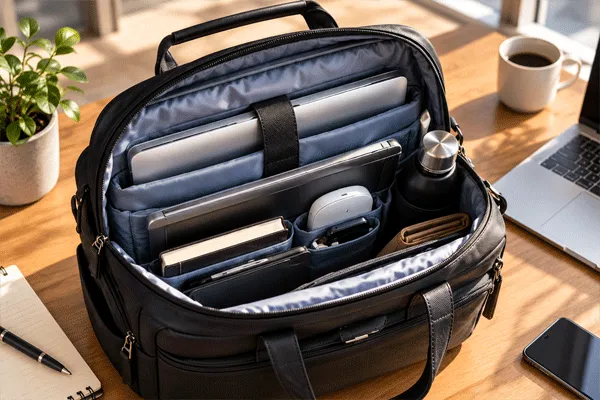
Before approving a sample, we recommend checking the product with real objects inside rather than examining it empty.
Add a phone. Wallet. Keys. Small bottle. Cosmetics.
Then carry it.
This simple test often reveals whether the interior pocket is too small, the opening is too narrow, or the bag loses its shape.
It is especially important when developing a slouchy product because the relaxed appearance still needs enough internal control to remain practical.

Shoulder Bag Guide: Shoulder Bags for Women, Designer Shoulder Bags & Handbag Design
For a brand owner, “custom” should mean more than adding a logo to an existing stock product.
As a China-based custom bag manufacturer, we support OEM, ODM, and private-label projects for global B2B bulk buyers, including importers, distributors, e-commerce sellers, promotional suppliers, corporate buyers, and outdoor and lifestyle brands.
A typical development project may start with any of the following:
From there, the design can be translated into dimensions, pattern construction, materials, lining, hardware, strap structure, logo method, packaging, and sample requirements.
This is where buyers can build commercially relevant designer shoulder bags without simply copying what already exists.
For example, rather than asking a factory to reproduce a famous branded style, a buyer can specify:
“We want a medium crescent silhouette, soft grain surface, wide strap, concealed magnetic closure, internal zipper pocket, and minimalist hardware.”
That is much more useful.
It gives the manufacturer a functional direction while leaving room for an original product identity.
| Modelo | Melhor Para | Typical Starting Point |
|---|---|---|
| OEM | Brands with finished designs | Tech pack or sample |
| ODM | Buyers needing design support | Concept or market idea |
| Private Label | Retailers building branded ranges | Existing/customized base model |
This process can apply to fashion women’s shoulder bags, promotional styles, travel bags, and lifestyle accessories.
For women’s shoulder bags, we can also adjust color, fabric, logo treatment, zipper pulls, lining print, packaging, hangtags, and other details according to the buyer’s brand direction and order requirements.
Bulk purchasing requires more discipline than approving a visually attractive sample.
Before production, buyers should confirm a specification sheet that clearly defines the product.
Important items include:
Material compliance should also be considered according to the destination market.
For example, the European Chemicals Agency’s REACH restrictions cover certain hazardous substances in textile and leather articles. ECHA specifically lists handbags among articles affected by restrictions on certain azo dyes and also notes restrictions involving Chromium VI in leather articles.
For U.S. market planning, buyers should also review the Federal Trade Commission’s requirements and guidance relating to textile, wool, leather, imitation leather, origin, and responsible-business identification where applicable.
Requirements vary by product construction and destination market, so testing and labeling plans should be confirmed for the actual product rather than copied from another SKU.
Our preferred workflow is straightforward:
Idea → Specification → Material Selection → Sample → Review → Revised Sample if Needed → Pre-Production Confirmation → Bulk Production → Inspection → Packing
This process is especially useful for e-commerce sellers and distributors because it creates a reference standard for future repeat orders.
A shoulder bag that becomes a successful SKU should be repeatable. Color, measurement, hardware, and construction need to remain controlled from order to order.
A shoulder design normally uses a shorter strap and sits under or near the arm. A crossbody style has a longer strap that runs across the body. Some products can serve both functions when they use a removable or adjustable strap.
The best configuration depends on the target consumer and intended carrying style.
Not always.
A tote describes the body style, usually with a relatively open and spacious interior. Many totes are carried over the shoulder, but some have shorter handles.
For product development, it is better to define dimensions, handle drop, opening, and capacity instead of relying only on category names.
No. Leather can support premium positioning, but textile, nylon, PU, canvas, woven materials, and other constructions may be better for certain markets.
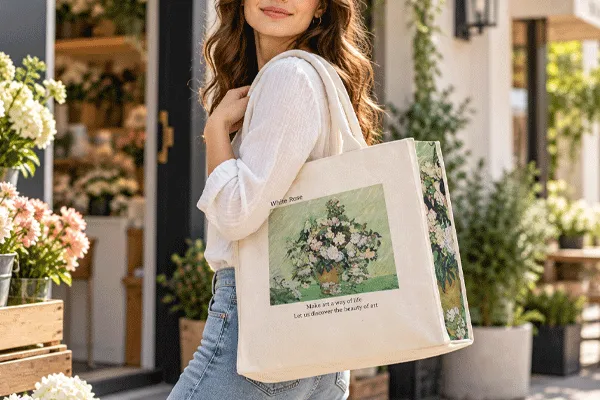
A beach brand may prefer raffia. An outdoor brand may want a technical textile. A fashion retailer may want a soft leather bag.
The right choice depends on function, price, appearance, compliance requirements, and customer expectations.
Yes. Private-label projects can normally include customized logos, labels, lining, hardware, color, packaging, and other branding elements depending on the design and order requirements.
Common branding methods include metal logos, embossing, debossing, printing, patches, woven labels, and customized zipper pulls.
In many cases, yes.
A reference image can help explain the general direction, but better results come from combining it with dimensions, target material, use case, customer profile, price positioning, and desired changes.
For an original brand, the goal should be to create a new product inspired by a market need rather than reproduce another company’s protected design.
The more complete the information, the more useful the quotation will be.
Try to provide:
If specifications are not complete, an ODM discussion can help turn the initial concept into a workable product proposal.
A strong shoulder bag begins with style, but successful product development goes much further. Capacity, comfort, construction, material, hardware, customer feedback, compliance, branding, and repeatable production all affect the final result.
For importers and brand owners, that creates an important opportunity. Instead of sourcing another generic product, you can develop a must-have item that fits your customer’s real needs and strengthens your own brand identity.
As a China-based manufacturer serving B2B bulk buyers, we support custom development from concept and material selection through sampling, production, inspection, and private-label packaging. Whether your next project is a compact fashion piece, a shoulder purse, a large lifestyle design, or a complete range of shoulder handbags, the best starting point is a clear customer profile and a clear product specification.
Nós responderemos dentro de 24 horas. Se for um caso urgente, adicione WhatsApp/WeChat: +86 15066236153. Ou ligue diretamente para +86 17657177170.
*Respeitamos sua confidencialidade e todas as informações são protegidas.
Usaremos suas informações apenas para responder à sua consulta e nunca enviaremos e-mails não solicitados ou mensagens promocionais.
 último blog
