





Private Label Women’s Backpack Manufacturer: What Branding, MOQ and Sampling Actually Involve
21 Temmuz 2026
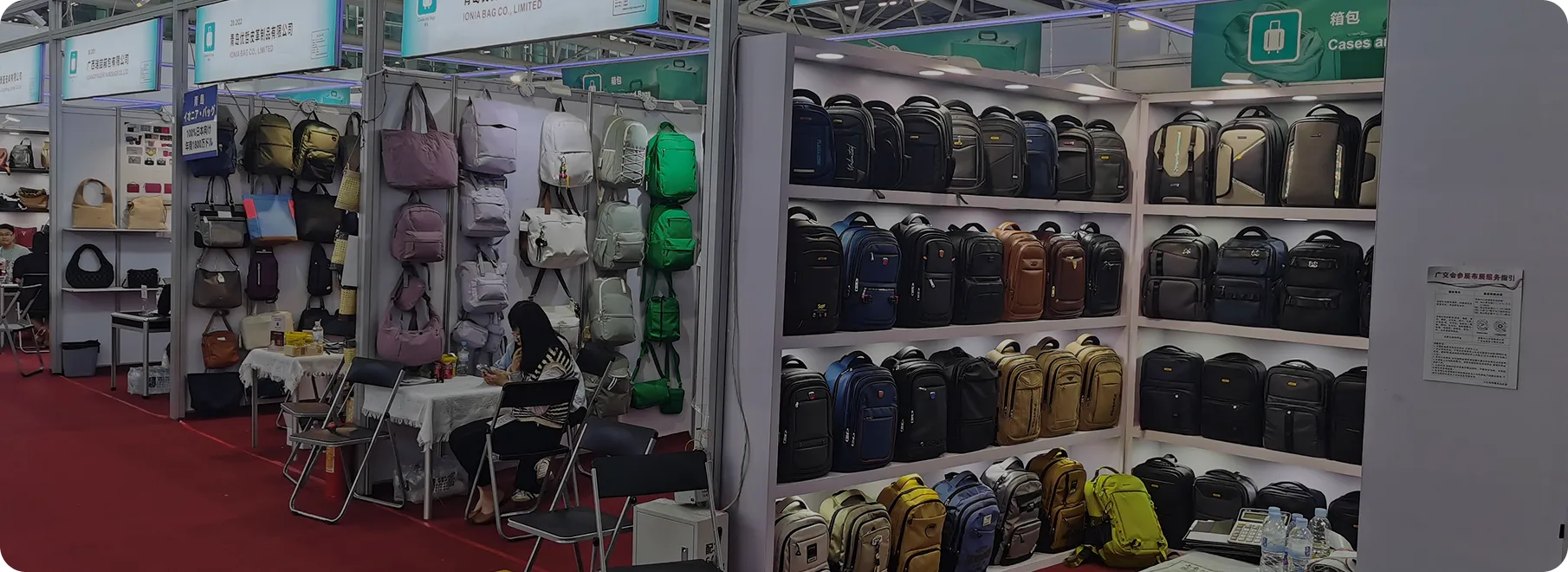
IONIA BAG Technical Team | IONIA BAG CO., LIMITED | Published: July 20, 2026
Private label backpack production runs on a fixed sequence: brief, base model or ground-up build, branding method, color, MOQ tiers, then two or three sample rounds ending in a signed pre-production sample. Skipping a step doesn’t save time. It moves the cost into the revision round, where changes are slower and more expensive.
Most pages selling private label manufacturing describe the factory. This one describes the process, in the order you’ll actually run it.
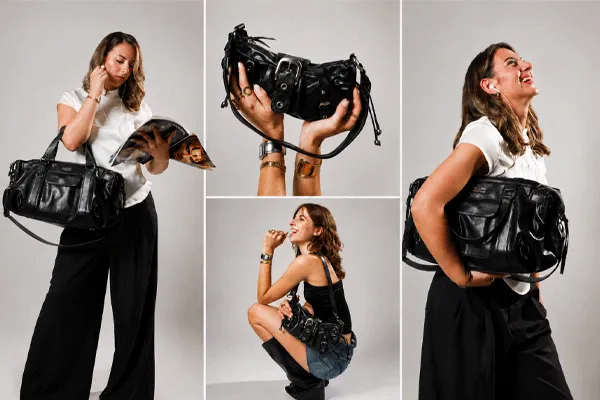
Private Label Women’s Backpack Manufacturer: What Branding, MOQ and Sampling Actually Involve
You need five things on paper. Not a full tech pack; that comes later. A brief.
Verification: you can hand the brief to someone outside your company and they can describe the product back to you. If they can’t, the factory can’t either.
Two routes, and the difference between them determines your cost, your timeline, and how defensible your product is.
Private label on an existing structure means you take a construction the factory already produces and make it yours: your colorway, your logo, your lining, your hardware finish, your packaging. Sampling is shorter because the pattern and the fit are already proven.
ODM or ground-up development means the pattern is drafted for your design. Compartment layout, silhouette, harness geometry, and proportions are yours. It takes longer and costs more at the development stage, and it produces something a competitor can’t order from the same catalog.
Brands frequently assume the second route is the serious one and the first is a shortcut. For a first SKU it’s usually the reverse. Proving demand on a branded existing structure, then reinvesting into ground-up development for version two, puts your development spend after you have sell-through data rather than before.
Verification: you have chosen one route in writing, and your quotation request names it. Asking for a quote without specifying the route gets you a number for a product neither party has defined.
Logo application isn’t a cosmetic choice made at the end. Method, material and placement are one decision, and the wrong combination shows up as cracking, peeling or thread pull after a few months of retail use.
| Yöntem | Works best on | Detail it holds | Color capability | Fails when |
| Nakış | Canvas, heavier fabrics | Limited on fine text and thin lines | Thread colors, limited gradient | Logo has small type or fine serifs |
| Örgü etiket | Any fabric, sewn into a seam or panel | High, including small type | Multi-color | Placement needs to sit on a curved or padded surface |
| Silicone / rubber patch | Fabric and functional materials | High, with raised depth | Multi-color, tooling required | Order is too small to justify the mold |
| Heat transfer / screen print | Smooth fabric panels | Yüksek | Multi-color | Applied over a seam, a curve or a compressed panel |
| Debossed / embossed | Leather and leather-look materials | Medium, shape-dependent | Tonal only | Logo relies on color contrast |
| Metal plate or hardware logo | Any, mounted on strap or front panel | Yüksek | Finish-dependent | Weight or hardware cost matters at your price point |
Two practical rules. Fine text and thin strokes do not survive embroidery on textured fabric, so if your wordmark is delicate, use a woven label or a patch. And any method applied to a panel that flexes or compresses will eventually show it, which is why logo placement should be confirmed against the actual construction rather than against a flat product render.
Verification: you have received a physical logo sample on the actual production material, not a digital mockup. This is a small request and it prevents the most common private label revision.
Color is where private label programs lose time. Three points decide the outcome.
Give a Pantone reference (TCX for textiles, TPG for coated materials) rather than a screen color or a photo. Screens vary; Pantone is a physical standard both sides can hold.
Understand that fabric dyeing carries its own minimum. Custom-dyeing a fabric to your color has a quantity threshold separate from your bag MOQ, because the mill runs a minimum meterage. Below that threshold you’ll be working from the factory’s stock color range, which is often perfectly workable and considerably faster. Ask which of your colors are stock and which require dyeing before you finalize the range.
Accept that lot-to-lot variation exists in dyed fabric, and specify the tolerance you’ll accept. Set that expectation before the first order, not when your second production run arrives slightly different from your first and your retail customer notices side by side on a shelf.
Verification: you hold an approved lab dip or a stock-color swatch, physically, before bulk fabric is cut.
“What’s your MOQ?” is the wrong question. It produces one number that tells you nothing about your economics.
Ask instead for unit pricing at three or four quantity points across your realistic range, and ask what changes at each. Then ask these separately, because each carries its own minimum and each can move independently of the bag quantity:
That breakdown tells you where your order actually gets expensive, which is rarely where brand owners expect. Often the bag quantity is flexible and the packaging or dyeing minimum is what forces the number up. Once you can see that, you can restructure the order — fewer colorways at higher quantity, or stock fabric for launch — instead of abandoning the program.
At IONIA BAG, MOQ is flexible by program and confirmed with the quotation, and trial orders are supported for new projects. There is no published price or price range for backpacks; quotations are issued per project against your specification, since they move with material, hardware grade, quantity and packaging.
Verification: you have a tiered quotation showing unit cost at multiple quantities, with the separate minimums itemized.
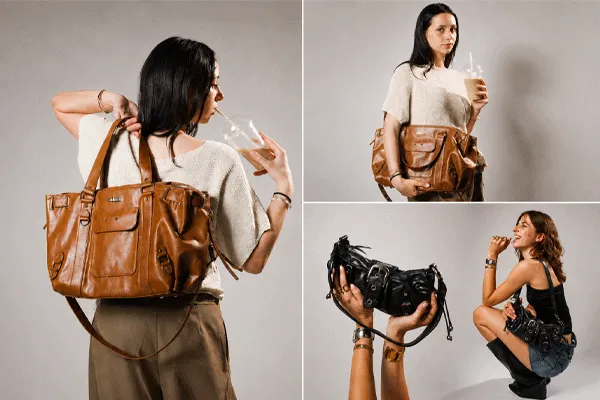
Private Label Women’s Backpack Manufacturer: What Branding, MOQ and Sampling Actually Involve
The first sample is not a retail product and shouldn’t be judged as one. It exists to answer construction questions.
What to request with it:
What to check when it lands:
Uneven stitching and imperfect logo alignment on round one are normal. Sample-room production isn’t line production. Judge structure now and finish at the pre-production stage.
Verification: you have written a consolidated revision list covering every change in one document. Sending changes in a drip of separate messages is the single fastest way to add a sample round.
Round two should confirm your revisions and nothing else. The trap here is scope creep: each new sample surfaces new ideas, and a program that could have closed in two rounds runs to five.
A workable discipline is to separate changes into two lists. Things that affect fit, durability or whether the product functions get fixed now. Things that are preference — a pocket you might like, a slightly different pull tab — go onto a version-two list. Ship version one.
If a third round is genuinely needed, it is usually because something in step one was left vague. That’s worth noting internally, because it will repeat on your next program otherwise.
Verification: every item on your round-one revision list is either resolved in the sample or has a written explanation of why it wasn’t.
The pre-production sample is the contractual reference for the bulk run. It should be made on the production line, in production materials, with final branding applied. Sign it, keep one, and let the factory keep one.
Packaging gets settled at the same point, and it’s routinely left too late:
If you plan to use a third-party inspection agency, name your acceptance criteria now. Buyer-specified inspection is supported, and an inspection is only useful if it’s checking the standard you agreed to rather than a generic one.
Verification: a signed, photographed pre-production sample plus an approved packaging spec exist before bulk cutting begins.
Standards referenced across the bag and textile industry include ISO 9001 for quality management systems, REACH for substance restrictions in the EU market, and California Proposition 65 for goods entering that market. These are general industry standards, not certifications automatically held by any supplier. IONIA BAG does not publish certificate numbers or issuing bodies on its website; where a retailer or compliance team requires specific documentation, request the original certificate and evaluate it directly.
The rule for your product page: name a standard only if you hold a document with a certificate number, an issuing body and a validity date. Everything else is described as a material property.
Four variations come up constantly in women’s backpack programs, and each changes the workflow above in a specific place.
Mini backpacks compress every proportion, which makes hardware selection harder rather than easier. Full-size zipper pulls and buckles look oversized on a small body, and the harness needs redrafting rather than scaling. Budget an extra sample round.
Rolling backpacks add a wheel housing, a telescoping handle and a reinforced base, which moves the product into a different construction category and a different price bracket. The failure points shift to the handle mechanism and the wheel mounting, so your sample checklist changes accordingly.
Men’s versions of a women’s design are not the same bag in darker colors. Torso length and strap geometry differ, and if you’re running both from one pattern, decide deliberately whether you’re building two harnesses or one unisex harness with a wider adjustment range.
Color-custom programs for corporate or team clients live or die on the dyeing minimum from step four. Confirm it before you promise anyone an exact brand color.
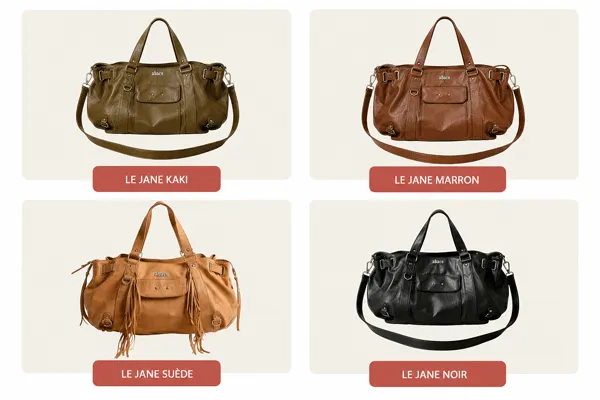
Private Label Women’s Backpack Manufacturer: What Branding, MOQ and Sampling Actually Involve
Private label gets you a branded product without carrying the development cost of an original pattern, and it gets you to market faster than ground-up design. Those are real advantages and they’re why most brands start here.
What it costs you: a base structure available to you is available to others, so your differentiation rests on material selection, colorway, branding execution and positioning rather than on the construction itself. If your category is crowded and your competitors are sourcing from the same pool of structures, that thinness will show. The answer is usually to private label your first run, learn what your customers actually complain about, and put that knowledge into a ground-up second version.
Compared with the trading-company route common in bag sourcing, working directly with a factory shortens the revision loop, since construction questions reach the production floor rather than a relayed intermediary. The trade-off is that a factory covers what it produces, so a buyer consolidating many unrelated product categories into one shipment may still prefer an intermediary.
IONIA BAG produces backpacks alongside tote, duffel, shoulder, crossbody, sling and handbag lines, brief cases, shopping bags, canvas bags, tool bags and wallets, from a factory in Qingdao operating since 2010. Customization covers materials (fabric, leather, functional and heavy-duty constructions, including ECO material options), structure, hardware, brand logo, and packaging.
Fixed model numbers, dimension ranges, fabric weights and price lists are not published for the backpack line. Specifications are set against your brief and confirmed in the quotation and the pre-production sample. If you need a written spec sheet for internal approval before sampling, request it against your requirement.
Q: What’s the minimum order for a private label backpack?
A: MOQ is flexible by program and confirmed with the quotation rather than published as a fixed figure. Ask for tiered pricing across your realistic quantity range, and ask separately about minimums for custom-dyed fabric, tooled branding and custom packaging, since those carry their own thresholds.
Q: How many sample rounds should I budget for?
A: Two to three for a private label program on an existing structure, more for ground-up development, mini formats and rolling constructions. The number depends more on how specific your initial brief was than on the factory.
Q: Can I get an exact Pantone match on my brand color?
A: Fabric can be custom-dyed to a Pantone reference, subject to the mill’s minimum meterage, which sits separately from your bag quantity. Below that threshold you’d work from stock colors. Lot-to-lot variation exists in dyed fabric, so agree a tolerance before the first run.
Q: What does a private label backpack cost per unit?
A: There’s no published price range. Quotations are project-specific and move with material, hardware, quantity and packaging. Send your brief or reference sample for a quote.
Q: Which logo method should I use?
A: It depends on your material and your logo’s detail. Fine text struggles with embroidery on textured fabric; woven labels and silicone patches hold small detail better; debossing suits leather but is tonal only. Request a physical logo sample on your actual production material before deciding.
Q: Can you produce men’s and women’s versions of the same design?
A: Yes. Harness geometry, strap curvature and torso length are configurable, so you can run two fits or one unisex harness with a wider adjustment range. Decide which at the brief stage, since it affects pattern development and your per-size minimums.
Q: Do you support trial orders before a full production run?
A: Trial orders and sampling-first workflows are supported for new programs, and buyer-specified third-party inspection is supported. Inquiries are answered within 24 hours.

Size 24 saat içinde cevap vereceğiz. Acil bir durum için lütfen WhatsApp/WeChat ekleyin: +86 15066236153. Ya da doğrudan +86 17657177170'i arayın.
*Gizliliğinizi saygı gösteriyoruz ve tüm bilgiler korunmaktadır.
Bilgilerinizi sadece sorgunuza yanıt vermek için kullanacağız ve asla istenmeyen e-postalar veya tanıtım mesajları göndermeyeceğiz.
 son blog
