








How Long Does It Take to Manufacture a Custom Bag? Custom Bag Production Lead Time and Manufacturing Timeline Explained
April 08, 2026
Need bags for your business fast, but worried about missed dates, poor communication, or costly mistakes? That is the real problem with ordering custom bags. A weak supplier can slow your launch. A skilled manufacturer helps you plan, avoid delay, and deliver on time.
How long does it take to manufacture a custom bag? In most cases, the full custom bag production lead time ranges from 4 to 12 weeks, depending on design complexity, materials, sample approval, order size, printing method, packaging, and shipping. Simple styles move faster, while highly customized bags, complex handbag designs, and large bulk orders usually take longer.

Why do custom bag lead times vary so much?
What are the main phases in a custom bag manufacturing timeline?
How long does sample and prototype development take?
What factors affect lead time in bag production?
Does order size change turnaround times?
How do materials, logo methods, and customization affect production?
How long does quality control, packaging, and final inspection take?
What is the difference between production time and shipping time?
How can buyers reduce lead time without hurting quality?
Why does working with a reliable bag manufacturer matter?
Not every bag follows the same path. A simple tote with one-color print is very different from a structured handbag with metal hardware, lining, inside pockets, reinforced handles, and branded packaging. That is why buyers often ask, “How long does it take?” but the honest answer depends on the product itself.
From my experience as a China-based bag manufacturer serving global B2B buyers, the biggest reason lead times vary is that every custom project has its own production needs. Some clients already have a full tech pack, exact dimension details, approved artwork, and clear labeling instructions. Others come with only a sketch or a rough idea. The more complete the information, the more efficiently the project can move.
A second reason is factory planning. Even a strong manufacturer needs to fit each order into a real schedule. Material sourcing, machine availability, labor planning, and production capacity all shape the final estimate. That is why two bags that look similar on the outside can have very different turnaround times.
A clear production timeline usually includes six main steps. When buyers understand these steps, they can plan launches, promotions, and seasonal sales with fewer surprises.
| Phase | What Happens | Typical Time |
|---|---|---|
| Inquiry & specification confirmation | Confirm style, size, material, logo, quantity, and packaging | 2–5 business days |
| Sampling & prototype | Make first sample, test details, revise if needed | 7–21 business days |
| Material sourcing | Prepare fabric, zipper, hardware, labels, and accessories | 5–15 business days |
| Bulk production | Cutting, sewing, printing, assembly, finishing | 15–35 business days |
| Quality control & packing | Quality control, qc, inspection, carton packing | 3–7 business days |
| Shipping & delivery | Export, transit, customs, final delivery | 5–40+ business days |
In a typical B2B project, the early phase is where most time is either saved or lost. If the buyer and manufacturer align quickly on the specification, materials, artwork, and testing standards, the later manufacturing process becomes smoother. That is also why many buyers review our custom bag manufacturing services before placing an order, so they can better understand how development, sampling, bulk production, and packaging are managed.
This is why I always tell buyers that ordering custom bags is not only about price. It is about planning. A good plan shortens the time it takes to move from idea to shelf.
The sample stage often takes 7 to 21 business days, though some projects may take longer. A simple shopping bag with standard fabric and basic logo printing can move quickly. A premium leather bag, a travel set with many compartments, or a fully custom-made structure may require more development time.
For many buyers, the prototype is the most important step because it turns an idea into something real. This stage checks size, shape, material feel, stitching, hardware match, and visual balance. A factory may also test durability, zipper function, carrying comfort, and brand presentation. Even small adjustment requests—such as changing strap width, pocket depth, or zipper direction—can change the timeline.
If the buyer sends a clear 3d drawing, artwork, and technical details from the start, the sample process becomes far more efficient. If not, there may be several rounds of revisions. That is normal. The goal is not speed alone. The goal is a high-quality custom bag that performs well in bulk production too.
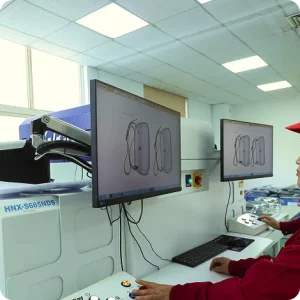
Many things can affect lead times, but a few stand out more than others. The first is design complexity. The more panels, trims, pockets, piping, embroidery, or hardware a bag includes, the more steps the factory must manage. A flat promotional tote is easy. A structured reliable bag for retail takes more care.
The second big factor is material sourcing. If the fabric, zipper, buckle, foam, webbing, or label is already in inventory, the project moves faster. If materials must be dyed, matched, tested, or imported, the lead time grows. Special eco materials, unusual colors, and strict branding demands can also add time.
The third factor is approval speed from the buyer side. Fast feedback matters. When we send artwork proof, lab dip, or pre-production details, a prompt reply keeps the bag production line moving. Slow approval creates a hidden delay, even when the factory is ready.
Here is a simple view of what most often changes the timeline:
Style complexity
Material availability
Order size
Logo method and customization
Sample approval speed
Factory workload
Holiday season and supply chain pressure
Packing and export requirements
Yes, order size has a direct impact on production. Small orders can sometimes move faster, especially when they use standard materials and simple decoration. But very small runs are not always the fastest if a factory must still prepare custom molds, labels, prints, or packaging for a low volume project.
For medium and bulk orders, planning becomes more important. A 500-piece order may fit into a normal line quickly. A 20,000-piece order needs deeper capacity planning, raw material preparation, cutting schedules, sewing line balancing, and carton coordination. That does not mean big orders are a problem. It only means they need earlier booking.
As a B2B-focused bag manufacturer, I usually advise buyers to confirm demand early if they need a seasonal launch. Bigger orders often bring better cost efficiency, but they also need a more realistic production and shipping plan. That is how serious brands stay timely instead of rushing at the last minute.
Materials shape everything. Cotton canvas, polyester, nylon, PU, and leather all behave differently in cutting, sewing, printing, and finishing. Some are easy to process. Others need more precision, stronger needles, extra reinforcement, or careful surface protection. That changes how long it takes to make the final product.
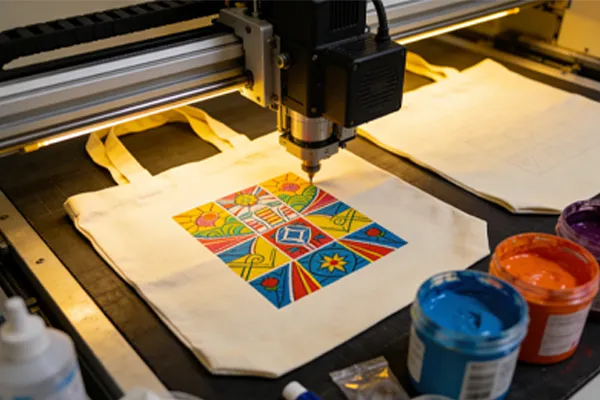
Logo application also matters. A simple silk-screen print is often faster than embroidery, debossing, metal plates, woven labels, or multi-location branding. A custom printed cosmetic pouch may move quickly. A premium retail brand project with foil logo, inner label, hangtag, and gift box may take longer.
The same is true for extra customization. If a buyer wants special lining, exclusive color matching, reinforced bottom panels, private-label accessories, custom zipper pullers, or retail-ready packaging, the timeline grows. None of this is bad. In fact, it often adds value. But it should be included in the manufacturing plan from day one.
| Custom Element | Impact on Lead Time |
|---|---|
| Standard fabric in stock | Low |
| Custom color matching | Medium |
| Embroidery or metal logo | Medium to high |
| Complex structure or many compartments | High |
| Special packaging sets | Medium to high |
| Multi-material design | High |
Many buyers focus only on sewing time, but quality control is just as important. A good manufacturer does not stop at making the bag. We also inspect stitching, dimensions, logo placement, color consistency, hardware function, carton marks, and packing accuracy. This step often takes 3 to 7 business days depending on volume and inspection standards.
Strong qc protects the buyer from costly mistakes. Imagine receiving a full shipment with the wrong barcode label, weak handle stitching, or an off-center logo. Fixing that after shipping costs more than taking extra time before shipment. That is why serious importers and retailers care about process, not just speed.
Final packaging also matters more than many buyers expect. A simple polybag and carton pack is quick. Retail-ready gift box sets, barcode stickers, insert cards, tissue wrap, and drop-test export cartons need more preparation. When the product is for e-commerce sellers or private-label stores, packing details are often part of the brand experience.
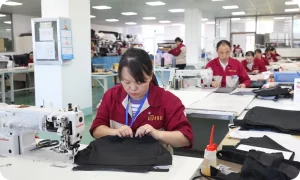
This point causes confusion all the time. Production time and shipping time are not the same. A factory may finish a bag order in 25 days, but the total delivery window is longer because transport still comes after production.
Here is the basic difference:
Production time = sampling, sourcing, sewing, inspection, and packing
Shipping time = freight booking, export handling, transit, customs, and local delivery
Air freight is faster, often around a few business days to two weeks depending on destination and customs handling. Sea freight is slower but cheaper for large B2B shipments. Rail or truck may work for some regions. So when a buyer asks for total turnaround, we always separate factory time from logistics time.
For overseas buyers, this matters a lot. Even the best quick turnaround in the factory cannot fix a late booking decision. That is why a reliable schedule must include both production timeline and logistics planning from the start.
The best way to reduce lead time is to remove uncertainty early. Clear communication saves weeks. When buyers provide a full tech pack, accurate dimension details, artwork files, quantity, packaging method, and testing needs at the start, the project moves much faster.
Here are practical ways buyers can move more promptly:
Approve samples quickly and clearly
Use standard materials where possible
Limit last-minute style changes
Confirm logo files in editable format
Book production early before peak season
Consolidate packaging decisions upfront
Choose a reliable supplier with stable systems
I also suggest buyers ask one simple question before placing the order: “What could delay this project?” A professional supplier should answer directly. Honest planning is better than unrealistic promises. Speed without control often creates a bigger delay later.
A good bag manufacturer does more than sew products. We manage sourcing, development, communication, planning, inspection, and export support. That matters because custom orders are full of moving parts. A weak partner causes confusion. A strong one makes the whole process more flexible and controlled.
As a China-based OEM, ODM, and private-label manufacturer for global B2B buyers, we see the same pattern again and again: buyers value consistency as much as price. Importers want stable quality. Brand owners want accurate execution. E-commerce sellers want packaging that supports retail. Corporate buyers want dependable timelines. Outdoor and lifestyle brands want performance and finish.
That is why choosing the right factory is really a risk-control decision. A professional partner helps source materials correctly, match your product to real production capacity, control each phase, and keep the project moving efficiently. In the long run, that is worth far more than chasing the lowest unit price.
Below is a practical example for a mid-volume private-label travel bag order:
| Week | Key Action |
|---|---|
| Week 1 | Confirm artwork, material, quantity, and quotation |
| Week 2 | Develop first sample |
| Week 3 | Buyer reviews sample and requests revisions |
| Week 4 | Approve revised sample and confirm bulk order |
| Week 5 | Source materials and prepare line |
| Week 6–8 | Bulk production |
| Week 9 | Inspection, packing, and booking shipment |
| Week 10+ | Transit depending on shipping method |
That is why many buyers hear “around 4 weeks” for simple projects, while others need 8, 10, or 12 weeks for more advanced work. The answer depends on the style, process, and logistics—not just the sewing line.
How long does it take to manufacture a custom bag from start to finish?
For most B2B projects, the full process takes about 4 to 12 weeks. Simple designs with standard materials are faster. Complex styles, special materials, and large bulk orders take longer.
Can I get a sample before bulk production starts?
Yes. In fact, a sample is one of the most important steps. It helps confirm size, material, logo placement, function, and overall quality before mass production begins.
What usually causes delays in custom bag orders?
The most common reasons are unclear specifications, slow sample approval, material shortages, design changes, complex logo methods, peak-season scheduling, and incomplete packaging instructions.
Is shipping included in the production lead time?
Usually no. Production and shipping are separate. Factory work ends after inspection and packing. Transit time depends on freight method, route, customs, and destination.
How can I make my order move faster?
Send complete artwork, dimensions, quantity, and packaging details early. Approve samples promptly. Avoid major changes after approval. Work with a factory that has stable planning and experience with OEM and ODM projects.
Are bigger orders always slower?
Not always, but larger orders need more planning. A factory with strong systems can handle volume well, but big orders still require more material preparation and line scheduling than small ones.
When buyers ask, “long does it take to manufacture a bag?” they are really asking something bigger: Can this supplier manage my project with control, quality, and clear timing?
That is the right question.
A professional custom bag partner should not only give you a price. They should give you a realistic timeline, explain what may slow the project down, and help you make better decisions from sample to shipment. That is how good products arrive on time—and how strong business relationships are built.
Custom bag lead times usually range from 4 to 12 weeks.
The biggest timing drivers are style complexity, materials, logo method, order size, and approval speed.
Sampling often takes 7 to 21 business days.
Bulk production for standard projects often takes 15 to 35 business days.
Quality control and packaging need their own time and should never be ignored.
Production time and shipping time are different and should be planned separately.
Buyers can shorten lead time by sending complete specifications and approving details quickly.
A skilled China-based OEM/ODM bag manufacturer helps reduce risk, improve consistency, and support better delivery planning.

We will reply you within 24 hours. If for urgent case, please add WhatsApp/WeChat: +86 15066236153,. Or call +86 17657177170 directly.
*We respect your confidentiality and all information are protected.
We will only use your information to respond to your inquiry and will never send unsolicited emails or promotional messages.
 last blog
