









¿Qué hace una buena bolsa de herramientas? Cómo elegir la bolsa de herramientas, caja de herramientas o mochila de electricista adecuada
16 de marzo de 2026
Una mala configuración de transporte pierde tiempo, esconde herramientas pequeñas, tensa tu espalda y se desgasta rápido en sitios de trabajo reales. La solución es simple: elige una bolsa de herramientas construida para tu oficio, tu carga y tu rutina diaria, no solo el precio más bajo.
Una buena bolsa de herramientas es resistente, organizada, cómoda de llevar y del tamaño adecuado para el trabajo que realmente haces. La mejor elección depende de tus herramientas, oficio y estilo de trabajo. Un electricista puede preferir una mochila de herramientas, mientras que un técnico de servicio puede querer una bolsa de mano compacta o una bolsa de herramientas con ruedas. El modelo adecuado protege el equipo, acelera el acceso y soporta el abuso diario.
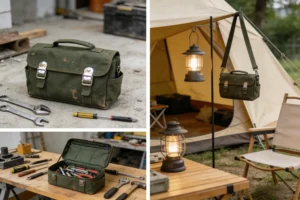
mochila de herramientas
¿Por qué importa tanto la bolsa de herramientas adecuada?
¿Qué debería hacer una buena bolsa de herramientas todos los días?
Bolsa de herramientas, caja de herramientas, bolsa de mano o mochila: ¿cuál es la mejor?
¿Es mejor una mochila de herramientas para un electricista o un técnico?
¿Qué materiales son los mejores: nailon o poliéster?
¿Qué características demuestran verdadera durabilidad y organización?
¿Cuántos compartimentos, bolsillos y bolsitas realmente necesitas?
¿Qué tamaño y capacidad deberías elegir?
¿Valen la pena estudiar marcas premium como Veto, Veto Pro Pac, Klein y DeWalt?
¿Cómo protegen tus herramientas la resistencia al clima y el diseño de la base?
¿Cuáles son los tipos de bolsas de herramientas más comunes hoy en día?
¿Cómo pueden los importadores y marcas de marca privada elegir al mejor proveedor de bolsas de herramientas?
¿Cómo eliges la mejor bolsa de herramientas para tu propio trabajo?
Una bolsa de herramientas no es solo un contenedor. Es parte de tu flujo de trabajo. Cuando tu disposición es deficiente, pierdes minutos en cada trabajo. Esos minutos se acumulan. Una bolsa que se vuelca, atasca su cremallera o entierra tus herramientas más usadas convierte tareas simples en lentas.
Siempre les digo a los compradores que empiecen con la funcionalidad antes que con el estilo. Una bolsa debería ayudarte a trabajar más rápido, más seguro y con menos estrés en tu cuerpo. Por eso elegir la configuración correcta importa más de lo que la gente piensa. La bolsa de herramientas adecuada puede mejorar el acceso, reducir el desorden y ayudar a mantener tus herramientas en mejor estado de trabajo a lo largo de los trabajos.
Para los compradores B2B globales, la lógica de compra va aún más allá. Los importadores, vendedores de marca privada y marcas de productos necesitan una bolsa de herramientas que coincida con la demanda del mercado, el oficio objetivo, el punto de precio y el atractivo en la estantería. Como fabricante de bolsas personalizadas con sede en China, vemos cuánto éxito del producto depende de equilibrar el costo, la estructura y el rendimiento a largo plazo para los usuarios reales.
A un nivel básico, una buena bolsa de herramientas debería llevar herramientas de forma segura, abrirse fácilmente y mantenerse organizada durante el movimiento. Eso suena obvio. Sin embargo, muchas bolsas fallan porque ignoran el uso diario. Pueden verse bien en línea, pero en el sitio se hunden, se rasgan o hacen que llevar herramientas sea más difícil de lo que debería ser.
Una bolsa práctica debería proteger el contenido del polvo, la humedad, golpes y manipulaciones bruscas. También debería facilitar la búsqueda de artículos pequeños. Un marco robusto, un fondo reforzado y un diseño de compartimentos inteligente son tan importantes como la calidad de la tela. Una bolsa que se mantiene en pie y te da acceso rápido a menudo es más valiosa que una con un estilo llamativo.
Los mejores modelos también ayudan a distribuir el peso. Eso es importante para las personas que usan sus herramientas a diario. OSHA señala que el riesgo de levantar y cargar depende de múltiples factores, no solo del peso, la cual es una razón por la que la ubicación del mango, el tamaño de la bolsa y el equilibrio general de la carga merecen una atención real.
No hay un solo ganador para cada oficio. La mejor bolsa de herramientas para una persona puede no ser adecuada para otra. La verdadera pregunta es cómo trabajas.
Una bolsa de mano blanda o una bolsa de herramientas abierta es genial cuando necesitas acceso rápido desde la parte superior. Funciona bien para trabajos de servicio ligeros, trabajos de lista de tareas y visitas de reparación móvil. Una caja de herramientas o caja de plástico puede ser mejor cuando necesitas protección de carcasa dura, apilabilidad o almacenamiento seguro en un camión. Una mochila o mochila de herramientas es a menudo mejor cuando caminas distancias largas, subes escaleras o necesitas tener ambas manos libres.
Aquí hay una comparación simple:
| Tipo | Mejor para | Principal fortaleza | Principal limitación |
|---|---|---|---|
| Abierto bolsa de herramientas | Trabajos de acceso rápido | Fácil alcance | Menos protección contra el clima |
| Suave bolsa de herramientas | Servicio general en campo | Flexible y más liviana | Puede hundirse si está mal construida |
| Mochila de herramientas | Electricistas, equipos de servicio, técnicos móviles | Sin manos, más fácil de llevar | Puede ser más lento para abrirse completamente |
| Bolsa de herramientas con ruedas | Kits pesados, trabajos grandes | Fácil de mover cargas pesadas | Pobre en escaleras o terrenos irregulares |
| Caja de herramientas | Almacenamiento en vehículo, kits protegidos | Protección fuerte | Más voluminosa y menos flexible |
El punto no es copiar lo que otro trabajador lleva. El punto es hacer que la bolsa coincida con tu ruta, tu variedad de herramientas y tu estilo de trabajo.
En muchos casos, sí. Un electricista o técnico de campo a menudo se mueve a través de edificios, escaleras, corredores de servicio, techos y espacios reducidos. Una mochila de herramientas puede ser más fácil de llevar que una bolsa lateral porque mantiene ambas manos libres y distribuye el peso de manera más uniforme sobre los hombros.
Ahí es donde características como correas acolchadas, soporte para la espalda y forma del cuerpo delgada son importantes. Una bolsa voluminosa en un hombro puede sentirse bien durante diez minutos, pero no después de un día completo. Una buena mochila ayuda a reducir la tensión mientras mantiene probadores, alicates, destornilladores y medidores en secciones separadas.
Aun así, no cada oficio necesita uno. Si trabajas desde un banco o carrito, una caja de herramientas o un tote abierto puede ser más rápido. Si llevas muchas herramientas pesadas, una bolsa de herramientas con ruedas puede ser más inteligente. La mejor opción depende de con qué frecuencia caminas, subes, te arrodillas y te reposicionas durante el trabajo.
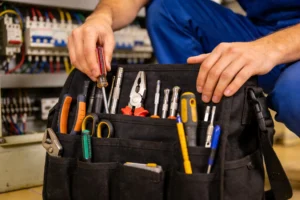
bolsas de herramientas
El material del que está hecho tiene un gran efecto en la vida útil. La mayoría de las bolsas de calidad utilizan nailon o poliéster, a menudo con un respaldo recubierto, costuras reforzadas y una base rígida. Un buen material debería resistir cortes, humedad, suciedad y el desgaste diario.
En categorías premium, el nailon de alta tenacidad a menudo es preferido para entornos de alta abrasión. CORDURA señala que sus telas clásicas están diseñadas para tener una fuerte resistencia al desgarro, resistencia a la abrasión y repelencia al agua, y están disponibles en tamaños de hilo como 330D, 500D, 700D y 1000D. Por eso, términos como alta denier, denier y resistencia a la abrasión son importantes al comparar bolsas de trabajo resistentes.
Dicho esto, el poliéster aún puede ser una opción asequible para el mercado adecuado. Mantiene bien el color y puede funcionar bien para productos de menor resistencia, kits promocionales y líneas de venta minorista de nivel inicial. Para proyectos OEM y de marca privada, a menudo ayudamos a los compradores a elegir la tela en función del precio objetivo, la robustez deseada y el tipo de trabajos que realiza el usuario final.
Una bolsa de herramientas resistente no solo debería sobrevivir al trabajo, sino que debería seguir siendo útil durante meses o años de abrir, cargar, arrastrar y levantar. La verdadera durabilidad y organización provienen de los detalles, no de los lemas de marketing.
Busca estas características:
Costuras reforzadas
Un camino de cremallera resistente con apertura suave
Herrajes de cremallera de calidad
Una base rígida o impermeable
Asas de agarre fuertes y una correa de hombro segura
Suficientes bolsillos de almacenamiento sin hacer que la bolsa sea voluminosa
Bolsillos internos y externos inteligentes
Lazos dedicados para herramientas
Una forma estable que no colapse
La información del producto de YKK también destaca cómo el diseño de la cremallera afecta el rendimiento de abrasión y el uso a largo plazo, por lo que muchas bolsas de trabajo premium consideran la calidad de la cremallera como un punto de venta clave en lugar de un pequeño detalle.
Una buena bolsa viene con estructura. Una mala se ve bien en el primer día, luego las asas se retuercen, las costuras se tiran, la tela se deshilacha y la disposición del bolsillo se convierte en un espacio muerto.
Más no siempre es mejor. Demasiados bolsillos pueden hacer que una bolsa sea pesada, confusa y cara. Muy pocos, y pasas el día buscando. El objetivo es una disposición práctica que se ajuste a tu rutina.
Un plan de compartimentos útil generalmente incluye áreas separadas para herramientas diarias, equipo de medición, consumibles de movimiento rápido y piezas pequeñas. Agrega algunos bolsillos para evitar que tornillos, brocas, probadores o cuchillas desaparezcan. Un bolsillo delgado para documentos o una tableta también puede ayudar a los equipos de servicio.
Piensa en tu carga exacta:
¿Llevas muchas herramientas pequeñas?
¿Necesitas un área para un juego de herramientas?
¿Llevas una herramienta más grande como un medidor, taladro o cámara de inspección?
¿Quieres bolsillos externos para un acceso rápido?
Un buen diseño de disposición protege la eficiencia. Un mal diseño de disposición crea desorden. Por eso, un diseño cuidadoso a menudo importa más que agregar la mayor cantidad posible de bolsillos.
El tamaño y la capacidad deben coincidir con las herramientas reales que llevas, no con tu suposición en un buen día. Muchos compradores sobredimensionan la bolsa. Luego, el usuario la llena, la sobrecarga y se pregunta por qué se siente terrible de llevar.
Una bolsa de herramientas compacta es a menudo la mejor para el servicio móvil porque controla el peso y mantiene visibles los elementos esenciales. Un modelo más grande funciona cuando necesitas mucho espacio, pero aún así debería ser fácil de levantar y cargar dentro y fuera de los vehículos. Recuerda: más espacio a menudo se convierte en permiso para llevar demasiado.
Aquí hay una manera práctica de elegir:
| Estilo de trabajo | Formato recomendado | Consejos de capacidad |
|---|---|---|
| Reparación ligera en casa o diaria | Pequeña bolsa de herramientas o caja de herramientas | Mantén solo el equipo básico |
| Llamadas de servicio eléctrico | Medio mochila de herramientas | Separar probadores y herramientas manuales |
| HVAC / mantenimiento de campo | Mediano-grande bolsa de herramientas que pueda llevar equipo mixto | Dejar espacio para piezas |
| Construcción pesada | Pesada tote abierto o bolsa de herramientas con ruedas | Soporte herramientas pesadas |
| Mercado promocional o minorista | Bolsa compacta con diseño limpio | Enfócate en la apariencia + función |
Para los compradores por volumen B2B, acertar con la capacidad es esencial. Una bolsa que parece demasiado grande en una página de producto pero se siente incómoda en la vida real no ganará pedidos repetidos.
Sí. Incluso si no estás comprando esas marcas directamente, son referencias útiles. Nombres como veto, veto pro pac, vetopropac, klein y dewalt ayudan a mostrar lo que los usuarios serios esperan de los productos premium para cargar herramientas.
Estas marcas generalmente se enfocan en diseños específicos para trabajos, construcción rígida, hardware confiable y usabilidad centrada en el comercio. La lección no es que cada bolsa debe copiarlas. La lección es que los líderes del mercado resuelven los verdaderos puntos de dolor del usuario. Eso incluye la velocidad de acceso, el equilibrio, la postura vertical, la lógica de los bolsillos y una mejor protección en la base.
Para el desarrollo de marca privada, esto importa mucho. Muchos importadores piden una bolsa inspirada en una posición premium pero ajustada a un precio de mercado diferente. Ahí es donde el desarrollo ODM se vuelve valioso. Podemos ajustar el peso del tejido, los detalles del molde, la cantidad de bolsillos, el estilo del asa y la construcción de los adornos para crear la bolsa adecuada para un canal objetivo sin perder la función principal.
Una bolsa de trabajo pasa tiempo sobre concreto, gravilla, suelos mojados, tierra, cajas de camiones y terrenos exteriores. Por eso la base es importante. Una base mantiene las herramientas secas cuando el suelo no lo está. Una base elevada o moldeada también mejora la estabilidad y reduce el daño en el tejido.
Resistencia al agua no siempre significa completamente impermeable. Pero una buena bolsa debería ofrecer resistencia práctica al agua a través de tejido recubierto, mejor diseño de costuras, cremallera cubierta y una base reforzada. Algunos compradores solicitan específicamente una base impermeable porque los usuarios a menudo colocan bolsas en condiciones húmedas.
Si trabajas al aire libre, esto no es opcional. Necesitas un diseño que ayude a proteger tus herramientas, mantenga las herramientas secas y soporte barro y sitios desordenados. Un panel inferior inteligente puede añadir años a la vida útil, especialmente cuando se combina con una construcción robusta y refuerzo en las esquinas.
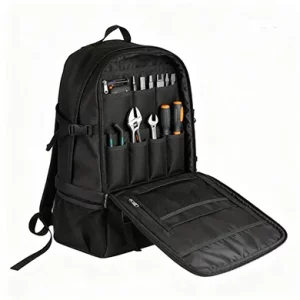
Hay muchas bolsas de herramientas disponibles, pero la mayoría cae en unas pocas categorías claras. Comprender los tipos de bolsas de herramientas ayuda a los compradores y usuarios finales a reducir opciones más rápido.
Las opciones más comunes incluyen:
Bolsa de herramientas de abertura superior
Bolsa de herramientas blanda con cremallera
Mochila estructurada para herramientas
Bolsa de herramientas con ruedas
Bolsa de servicio compacta
Rollo de herramientas plano
Cinturón de herramientas para llevar en la cintura
Caja de herramientas dura
Formatos especiales como transportadores de herramientas cantilever
Cada uno sirve a un flujo de trabajo diferente. Un rollo de herramientas es excelente para kits manuales seleccionados. Un cinturón de herramientas ayuda cuando necesitas acceso constante mientras te mueves. Una bolsa de servicio con cremallera es adecuada para técnicos de mantenimiento. Un formato de bolsa tote puede ser el mejor para equipos de reparación que necesitan una vista rápida del contenido. También hay varios tipos de transportadores de herramientas diseñados para uso específico en comercio, por lo que la planificación de productos específica para el comercio es un punto de venta tan fuerte en la fabricación OEM.
Aquí es donde la calidad del producto se encuentra con la estrategia empresarial. Un proveedor sólido debería hacer más que coser tela. Debería comprender el comportamiento del usuario final, las necesidades de prueba, los objetivos de marca y la adecuación del canal.
Cuando los importadores o propietarios de marcas nos piden ayuda para elegir el socio de fabricación adecuado, sugiero revisar estos puntos:
Capacidad OEM, ODM y de marca privada
Opciones de abastecimiento de material como nylon y tejidos recubiertos
Velocidad de desarrollo de muestras
Soporte para logotipos, colores y empaques personalizados
Control de calidad de costuras y hardware
Capacidad para construir versiones de grado industrial o listas para el retail
MOQ flexible para probar un nuevo mercado
Experiencia con productos para exterior, viaje y carga de trabajo
Una buena fábrica también entiende el posicionamiento. Algunos compradores quieren una bolsa de servicio premium. Otros necesitan una opción más asequible para distribución masiva. Algunos quieren una mochila compacta para equipos de servicio. Otros necesitan otro estilo de bolsa orientado a promociones minoristas o cadenas de ferretería. El proveedor debería ayudar a traducir la demanda del mercado en estructura de producto.
Ahí es donde un fabricante de bolsas personalizadas con sede en China puede ofrecer un valor real. Apoyamos a los compradores por volumen B2B con desarrollo OEM, ODM y de marca privada para diferentes canales de venta, ayudando a hacer coincidir tejido, diseño, marca y empaque final con el cliente final.
Empieza con el uso real, no con suposiciones. Pregunta dónde trabajas, cuán lejos caminas, qué llevas y qué te frustra en tu configuración actual. La mejor bolsa de herramientas es la que se adapta a tu rutina diaria, no la que tiene más características en papel.
Aquí hay una lista de verificación simple:
Enumera las herramientas y equipos que usas todos los días.
Separar los elementos imprescindibles de los extras que raramente se usan.
Decide si la velocidad de acceso o el soporte de carga importa más.
Elige el formato: tote, bolsa blanda, mochila de herramientas o caja de herramientas.
Revisa la base, costuras, sujetadores y diseño del asa.
Asegúrate de que la bolsa sea fácil de mover de trabajo a trabajo.
Elige un modelo que equilibre apariencia, función y vida útil.
Cuando haces eso, se vuelve mucho más fácil identificar la herramienta correcta, el diseño correcto y el formato de transporte correcto. Las buenas bolsas de herramientas están construidas alrededor del uso. Las excelentes se sienten naturales desde la primera semana.
¿Qué hace que una buena bolsa de herramientas sea adecuada para el trabajo diario?
Una buena bolsa de herramientas debe ser fuerte, estable, fácil de organizar y cómoda de llevar. Debe ajustarse a tu carga diaria, abrirse rápidamente y soportar un uso intensivo sin costuras débiles o hardware fallido.
¿Es una mochila mejor que una caja de herramientas?
Una mochila a menudo es mejor para movilidad, escaleras y movimiento manos libres. Una caja de herramientas es mejor para protección rígida y almacenamiento en camiones. La mejor opción depende de dónde y cómo trabajas.
¿Qué tela es la mejor para una bolsa de herramientas?
Para aplicaciones más exigentes, se prefiere a menudo el nylon con una construcción de alta denier debido a su resistencia y rendimiento contra la abrasión. El poliéster puede funcionar bien para líneas de productos de menor carga o de mejor precio.
¿Cuántos bolsillos debería tener una bolsa de herramientas?
Suficientes para organizar tu equipo esencial, pero no tantos como para que la bolsa se vuelva voluminoso o confusa. Una mezcla inteligente de secciones principales y bolsillos de acceso rápido suele funcionar mejor que un exceso de bolsillos.
¿Vale la pena una bolsa de herramientas rodante?
Sí, cuando transportas kits más pesados o te mueves por sitios grandes. Una bolsa de herramientas rodante reduce la tensión al levantar, aunque es menos conveniente en escaleras o terrenos irregulares.
¿Puedo desarrollar una bolsa de herramientas de marca privada para mi mercado?
Sí. El desarrollo de OEM y ODM te permite personalizar tamaño, tela, logo, color, empaque, distribución de bolsillos y nivel de características. Esto es especialmente útil para importadores, distribuidores y marcas de productos que apuntan a un comercio o punto de precio específico.
Una buena bolsa de herramientas debería mejorar la velocidad, la comodidad y la organización.
El mejor formato depende del comercio, la carga y el estilo de movimiento.
Mochila, tote, caja de herramientas y opciones rodantes cada una sirve para diferentes trabajos.
La tela, el diseño base, la costura y la calidad de la cremallera afectan el rendimiento a largo plazo.
Una distribución inteligente de bolsillos es mejor que una cantidad aleatoria de bolsillos.
La capacidad debe coincidir con el uso real, no con la carga máxima posible.
Las marcas premium son puntos de referencia útiles, pero la mejor elección es la que se ajusta a tu mercado y flujo de trabajo.
Para compradores B2B, el fabricante adecuado debería apoyar OEM, ODM, marca privada y control de calidad fiable.
La bolsa de herramientas adecuada no es solo almacenamiento, es una herramienta de productividad.


Le responderemos en un plazo de 24 horas. Si para el caso urgente, por favor agregue WhatsApp/WeChat: +86 15066236153,. O llame directamente al +86 17657177170.
*Respetamos su confidencialidad y toda la información está protegida.
Sólo utilizaremos sus datos para responder a su consulta y nunca le enviaremos correos electrónicos o mensajes promocionales no solicitados.
 último blog
