









Personalized Dog Carrier Guide: How to Choose and Customize the Right Pet Carrier for Your Brand
September 02, 2026
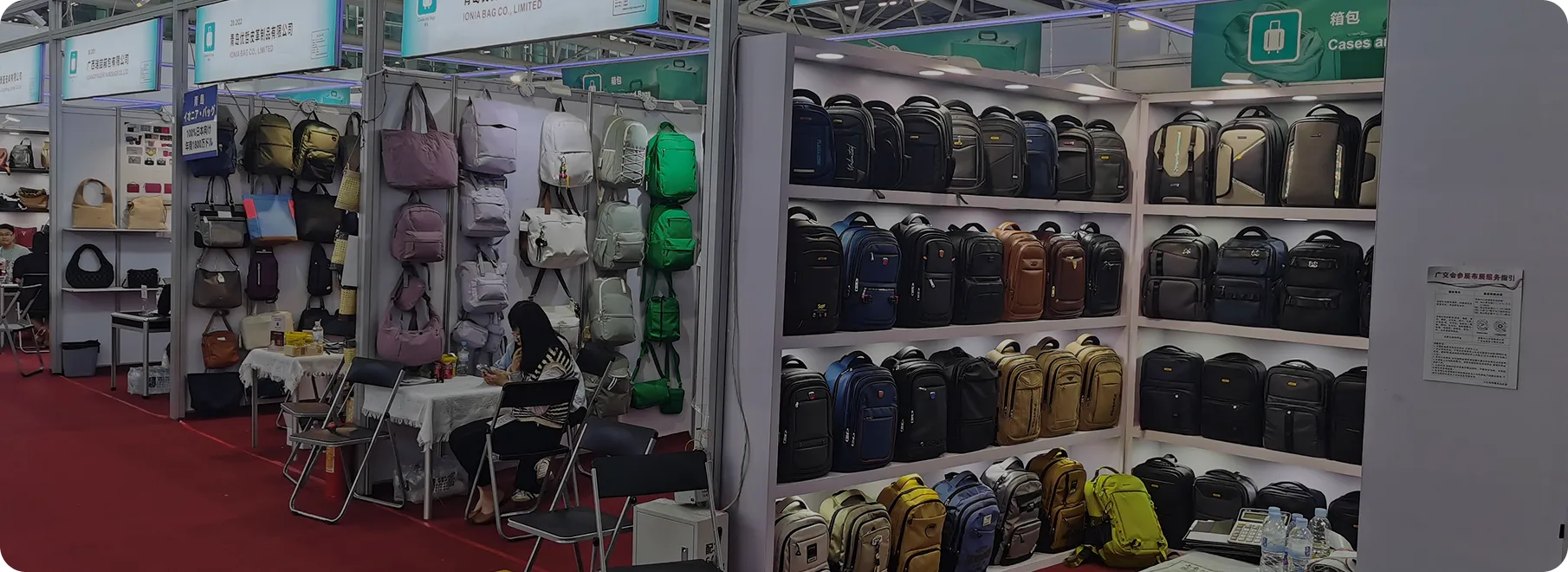
A cute dog carrier can still fail if it has weak straps, poor ventilation, an unstable base, or the wrong size. For brands ordering in bulk, one design mistake can affect thousands of units. A well-designed personalized pet carrier combines comfort, safety, durability, branding, and practical travel features.
A personalized dog carrier is a pet travel bag customized with a brand logo, monogram, name, color, material, size, or special features. The best carrier should fit the pet comfortably, provide adequate ventilation, have secure closures and a stable base, and match its intended use. For airline travel, buyers should verify the current requirements of the specific airline instead of relying only on an “airline-approved” label.
Personalized Dog Carrier Guide: How to Choose and Customize the Right Pet Carrier for Your Brand
For consumers, choosing a pet carrier may seem simple. Pick one that looks nice, check the size, and go.
For an importer or private-label brand buying 3,000 pieces, it is different.
You need to consider fabric, structure, mesh, base support, zipper strength, shoulder straps, internal safety features, pet size, packaging, logo position, washing requirements, and quality consistency.
As a China-based custom bag manufacturer, we develop OEM, ODM, and private-label carrier bags for distributors, pet brands, e-commerce sellers, promotional companies, and lifestyle retailers. From our experience, the best pet products are designed around the animal first and branding second.
Good design does both.
A personalized dog carrier is a carrying bag designed for a dog and customized for a specific brand, retailer, customer, or pet owner.
Personalization can be simple. A buyer might add a logo to an existing carrier design.
It can also be much deeper.
Brands can customize:
Some retailers also allow consumers to personalize the final item with the pet’s name or owner’s initials.
This gives the product a stronger emotional value, especially for dog lovers buying for a beloved pet.
For B2B buyers, personalization can also help avoid direct price competition. Instead of selling the same generic carrier found on dozens of marketplaces, a brand can build its own shape, colors, function, and visual identity.
The right design depends on how customers will use it.
A carrier for a quick visit to the vet does not need exactly the same structure as an airline-style travel bag or outdoor backpack.
| Carrier Type | Main Advantage | Typical Use |
|---|---|---|
| Soft-sided carrier | Lightweight and foldable | Everyday travel |
| Dog tote | Fashionable and easy to carry | Shopping, short trips |
| Backpack carrier | Hands-free carrying | Walking, travel |
| Expandable carrier | More resting space | Longer trips |
| Rolling carrier | Easier movement with heavier pets | Airports, transport |
| Car seat carrier | Vehicle-focused design | Road trips |
| Multi-function carrier | Carrier + bed + seat | Travel brands |
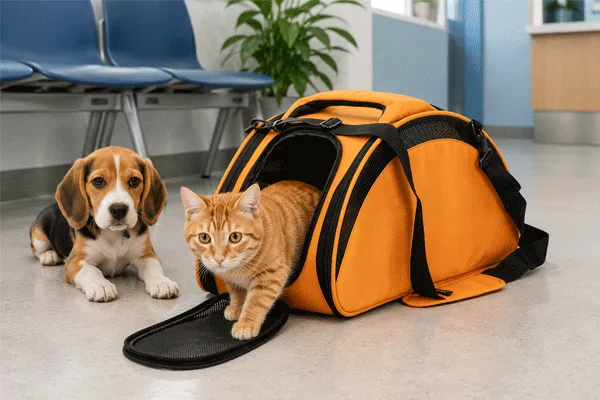
| Cat carrier | Structured transport | Cats and small pets |
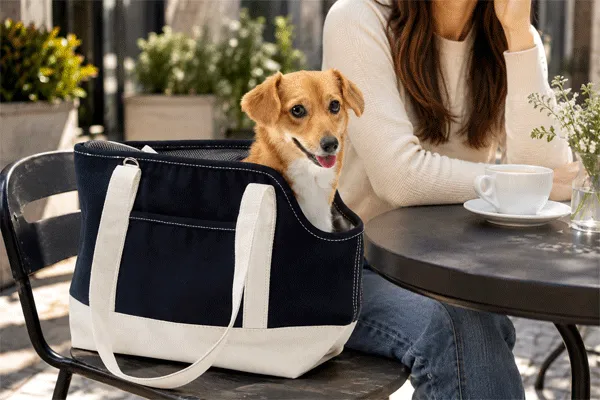
A dog tote may work well for fashion and lifestyle brands. It can use a classic tote bag silhouette while adding pet-specific mesh, a stable floor, and an internal leash attachment.
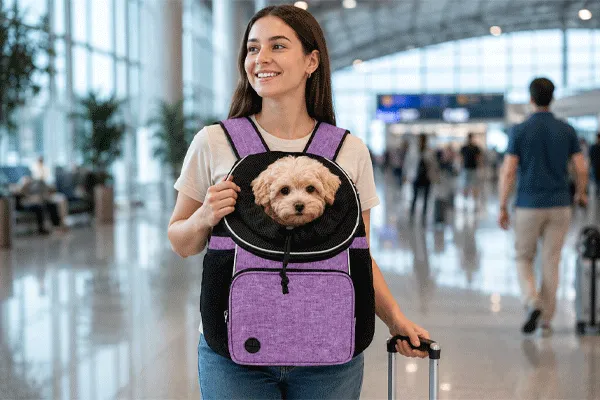
A backpack design is better when customers want their hands free. It can distribute weight across both shoulders and may work well for outdoor or urban pet travel.
For small dogs such as a Maltese, a compact tote or soft-sided carrier may be suitable when the dimensions and weight capacity are appropriate.
There is no universal best style.
The product must match the customer.
Size is one of the most important design decisions.
A carrier that is too small can restrict the animal. One that is unnecessarily large can be harder to carry and may not suit its intended transport method.
IATA guidance says that an appropriately sized travel container should allow a dog or cat to stand and sit erect, turn around normally, and lie down in a natural position.
That principle is useful even when developing an everyday carrier.
For a B2B product line, consider creating multiple sizes based on:
Do not market only by weight.
Two dogs that weigh the same can have very different body shapes.
A long-bodied dog may need more floor length, while another animal may need more internal height.
| Product | Target Pet | Design Priority |
|---|---|---|
| Small tote | Very small dog/cat | Compact carry |
| Medium soft carrier | Small dogs/cats | More internal space |
| Expandable model | Small-medium pets | Resting room |
| Backpack | Small pets | Weight distribution |
For OEM development, provide both internal dimensions and external dimensions.
Customers care about outside size.
Pets care about inside space.
A carrier is an enclosed space.
Heat can build up quickly if airflow is poor.
That makes ventilation a core product feature, not decoration.
IATA’s current live-animal guidance emphasizes adequate ventilation and requires travel containers to provide enough space and airflow for animal welfare. Its guidance for in-cabin travel also warns that compressing a soft-sided bag under a seat can block ventilation openings and increase heat buildup.
That has a clear design lesson for manufacturers.
Do not place all mesh windows in areas likely to be blocked by:
A good soft carrier may use mesh on several surfaces to provide plenty of ventilation.
Mesh also lets owners see their pup, which can reduce anxiety for both owner and animal.
For stronger designs, the mesh should resist:
Breathable does not have to mean fragile.
Personalized Dog Carrier Guide: How to Choose and Customize the Right Pet Carrier for Your Brand
Be careful with this phrase.
There is no single universal bag size that every airline accepts.
IATA specifically states that it does not certify, approve, endorse, or sell any particular pet carrier brand or model. Individual airlines may also have requirements that are stricter than general IATA guidance.
So an airline-approved claim can be misleading unless you define exactly what it means.
A safer B2B approach is to use language such as:
For cabin travel, the carrier generally needs to fit under the seat or in another location allowed by the airline. IATA notes that only small dogs and cats and suitably sized containers will normally fit under passenger seats.
But the actual space under the seat in front varies by:
Therefore, brands should not print one fixed statement such as:
“Fits every airline.”
Better:
“Please confirm current carrier dimensions and pet policies with your airline before travel.”
This protects customers and protects the brand.
A fashionable bag is still a pet product.
Comfort and safety must come before appearance.
Useful safety features may include:
A pet should not be able to push the carrier open.
Strong zippered openings can also use locking clips or double zipper pulls.
A short built-in attachment can connect to a harness to reduce the chance of the animal jumping out when the top opens.
It should generally connect to a harness rather than being used as a substitute for safe restraint.
A weak floor sags under the animal.
A stable base helps the dog stand and lie more naturally.
Sharp hardware or exposed edges can injure a pet.
IATA container standards also emphasize smooth interiors and construction that prevents noses or paws from protruding in ways that could cause injury.
The handle for easy carrying should be reinforced at high-stress points.
The same applies to:
Your product may hold a 5 kg dog thousands of times during its service life.
Handle stitching is not a decorative seam.
It is structural.
The material depends on product positioning.
Common options include:
IONIA BAG’s existing pet-carrier range uses materials such as Oxford cloth, polyester, breathable mesh, and canvas across backpack, tote, wheeled, and expandable formats.
These are practical for high-volume products.
They can offer:
Nylon can work well for lightweight travel products and premium functional designs.
Personalized Dog Carrier Guide: How to Choose and Customize the Right Pet Carrier for Your Brand
A canvas tote creates a softer lifestyle look.
It can work particularly well for a designer dog carrier or fashion-focused collection.
IONIA BAG’s current canvas dog tote design, for example, combines a heavy canvas body with breathable mesh, reinforced shoulder straps, storage, and OEM/ODM customization.
Mesh is essential for many carrier designs because it supports ventilation.
The important issue is balance.
Large open mesh panels improve airflow but may reduce structural stiffness.
The rest of the bag must compensate.
There are several levels of customization.
The buyer chooses an existing product and changes the logo.
Options may include:
IONIA BAG currently supports branding details including metal logo plates, woven labels, rubber patches, and custom zipper pullers for pet carrier projects.
A retailer may keep the basic structure but select new fabrics, colors, trim, or lining.
This is where a product becomes much more distinctive.
You can customize:
A brand may develop its own silhouette from concept to prototype.
For example:“We want a chic personalized dog tote for urban customers, suitable for small dogs, with beige canvas, black trim, breathable top mesh, removable cushion, and subtle monogram.”
That is no longer generic sourcing.
It is product development.
Private-label branding is for the company.
Consumer personalization is for the owner.
These are different.
A personalized pet carrier can include:
A monogrammed dog tote may appeal to fashion consumers.
A printed pet silhouette may work for gift retailers.
A removable name patch can be practical for e-commerce sellers because the main carrier stays standardized while personalization happens later.
This approach can simplify fulfillment.
Instead of manufacturing every carrier individually, the supplier can produce a standard bag and customize a smaller component.
For brands selling personalized dog bags, that can improve flexibility.
Owners want convenience.
Pets need comfort.
A good design does both.
A removable plush or padded cushion can create a more cozy resting area.
A removable base is also easier to clean.
Pet products get dirty.
Mud, hair, food, and accidents happen.
Where possible, use surfaces that are washable or easy to wipe clean.
If a component is advertised as machine-washable, confirm that the complete material, foam, zipper, decoration, and structure can tolerate machine washing.
Owners carry more than the pet.
They may need:
A well-positioned pocket can make the carrier more useful without reducing pet space.
A carrier may feel light when empty and very different with a 7 kg animal inside.
Padded handles and shoulder straps can improve the owner’s travel experience.
For a backpack model, strap width and back padding become even more important.
An expandable carrier can be very useful—but only in the right situation.
The product remains compact while moving, then opens to create more resting space when stationary.
This can appeal to customers waiting at:
Expandable designs are also visually attractive for e-commerce because the functionality is easy to demonstrate.
However, more moving parts create more production risks.
A manufacturer must control:
An expandable carrier that collapses inward under pressure is not useful.
It must remain stable.
For B2B development, test the carrier both:
closed + expanded
A product has to work in both modes.
There is no single answer because each reaches a different customer.
The dog tote is ideal for:
It offers strong comfort and style potential.
A backpack is practical for:
A pet travel backpack can keep the owner’s hands free.
A car seat style product can focus on road travel.
Some multi-purpose designs convert from a carrier into a pet seat or bed.
A rolling product can combine pet carrier and luggage ideas.
This can be useful in airports, where carrying a heavier animal for long distances becomes tiring.
A purse-style carrier can appeal to fashion consumers, but pet function still matters.
Do not reduce mesh, internal space, or stability just to make the bag look more like a handbag.
Pet comfort is part of product quality.
Testing should reflect real use.
As a custom manufacturer, we recommend controlling critical points throughout production rather than checking only finished cartons.
Verify:
Check:
Consider:
IONIA BAG’s current pet carrier manufacturing guidance highlights strong handle and strap stitching, breathable mesh, stable base support, smooth zippers, comfortable carrying, secure internal attachment, and consistent finishing as key quality points.
For B2B buyers, sampling is also critical.
The approved sample should become the reference for:
material + dimensions + logo + structure + packaging
That is much safer than controlling mass production from photos alone.
Do not launch ten nearly identical carriers.
Build a collection around use cases.
For example:
| SKU | Positioning | Key Feature |
|---|---|---|
| Carrier 01 | Everyday | Soft-sided |
| Carrier 02 | Fashion | Dog tote |
| Carrier 03 | Outdoor | Backpack |
| Carrier 04 | Travel | Airline-style |
| Carrier 05 | Premium travel | Expandable |
| Carrier 06 | Road trip | Carrier + car seat |
This makes the collection easier for distributors to sell.
It also helps e-commerce brands target different search intent.
A customer looking for a cat carrier does not necessarily want the same product as someone searching for a fashionable dog tote.
A traveler may value:
An outdoor customer may care more about:
As a China-based OEM/ODM bag manufacturer, we can develop pet-carrier collections around these different sales channels rather than treating every product as one generic carrier. IONIA BAG’s current carrier category already includes tote, backpack, rolling, expandable, soft-sided, and multi-functional structures for B2B customization.
Yes. Common options include embroidery, printing, woven labels, rubber patches, metal logo plates, and custom zipper pullers. The best process depends on the carrier material, logo size, positioning, and target price.
A soft-sided tote, backpack, or compact travel carrier can be perfect for small dogs when its internal dimensions, support, ventilation, and weight capacity fit the individual animal.
Yes. Many products can serve as both a dog and cat carrier when size, ventilation, security, and structure are suitable. Brands should define recommended pet dimensions and weight clearly.
Some airlines accept a soft-sided in-cabin carrier, but requirements vary. IATA allows certain non-rigid in-cabin containers under its guidance, while individual airlines can impose additional rules. Buyers and travelers should confirm current airline requirements before each trip.
No. IATA does not certify or approve individual pet carrier brands or models, and airlines can have their own rules. Avoid promising universal airline acceptance.
Yes. A removable cushion, base board, lining, storage pocket, and other travel accessories can be customized during OEM or ODM development. Material and washing instructions should be tested before marketing claims are finalized.

We will reply you within 24 hours. If for urgent case, please add WhatsApp/WeChat: +86 15066236153,. Or call +86 17657177170 directly.
*We respect your confidentiality and all information are protected.
We will only use your information to respond to your inquiry and will never send unsolicited emails or promotional messages.
 last blog
